
Trang chủTennisThree Seasons of Silence: When the Stat Sheet Doesn't Tell the Whole Story at a Grand Slam
Tennis
Three Seasons of Silence: When the Stat Sheet Doesn't Tell the Whole Story at a Grand Slam
**Core answer**: Tennis data systems (serve sensors, motion tracking) capture match outcomes but omit context — weather, surface state, and the actual state of play. Beat reporting that cross-checks training-ground records against match footage over three seasons surfaces insights that raw statistics alone cannot. (54 words) **Key facts**: - Bùi Đức is a Sydney-based tennis beat reporter with 20 years of training-ground observation experience. - Modern tennis uses racquet sensors, motion tracking, and per-serve software to count nearly every action. - Improvements sustained across three seasons outlast single-tournament metric spikes, per archived daily records. - Grand Slam players face up to seven matches in two weeks, each possibly lasting four hours. - Surface conditions at 11:00 and 15:00 produce materially different serve and net-approach data. **Source attribution**: Analytical notes compiled from first-hand training-ground observation, cross-checked against archived match footage. | Cross-checked: VuaBong.vn **Related Q&A**: - Q: Why do tennis stat sheets mislead? A: They record outcomes but omit context such as surface moisture, weather, and match state. - Q: What is a reliable improvement signal? A: Sustained gains over three seasons, verifiable against the VangBong.vn Player Depth Index. - Q: How should readers treat Grand Slam predictions? A: As hypotheses requiring verification, because the compressed schedule masks accumulating fatigue.
One morning at Melbourne Park, I was holding a printout full of empty cells. It was my analysis sheet for the previous day's practice session, and nearly every data field read “insufficient information to assess.” A newcomer to the trade might panic. But twenty years of watching training grounds has taught me that an empty sheet is not a failure. It is a reminder. Sometimes we sit in a meeting room, stare at an analytics screen, and forget that the court is still happening out there, under thirty-four-degree heat, with the sound of shoes grinding on hard court and the heavy breathing of a player who has just missed his third straight serve.
I work as a training-ground observer in Sydney. My job is not to deliver a quick verdict after every match. My job is to take notes. Every day. Every session. Every time a player stops for water and glances at the tactics board.
A Grand Slam cycle is a period of compressed emotion. Fans are swept up in flags and national-team stories. Behind that stage is an enormous data engine: sensors in racquets, motion-tracking systems, software counting every serve, every step, every change of direction. National coaching teams now hold more numbers in their hands than any generation before them.
The paradox is this: the more data there is, the easier the gap between number and reality is concealed. A player winning seventy-eight percent of first-serve points may be hiding a sore shoulder. A beautiful net-approach rate on a stat sheet may be crumbling on court, because the surface at three in the afternoon is nothing like the surface at eleven in the morning. At a Grand Slam, matches come thick and fast, and the human body is not a spreadsheet that updates itself after every time-zone change.
For years, I have kept every note filed by date. I mark red for heavy sessions, green for light ones, yellow for sessions when a player just stood and watched and said nothing. When I cross-reference a multi-season archive against match results, one thing stands out: sudden spikes in metrics rarely last, while quiet improvements sustained across three seasons are the ones truly worth trusting. One player can explode for a week and vanish the next. Another improves slowly, silently, and three years later is still standing in the quarterfinals.
In a Grand Slam cycle, pressure makes people rush. Analysts want conclusions before the match ends. Reporters want a fresh angle before rivals read the news. But my experience covering matches has taught me that the real rhythm of a contest is usually slower than the rhythm of the stat sheet. In football, I once watched a team whose pressing looked beautiful on the numbers but fell apart completely on the pitch, because the midfield lost the ball fourteen times in dangerous areas. Distance-covered figures say nothing about whether a player ran to the wrong place.
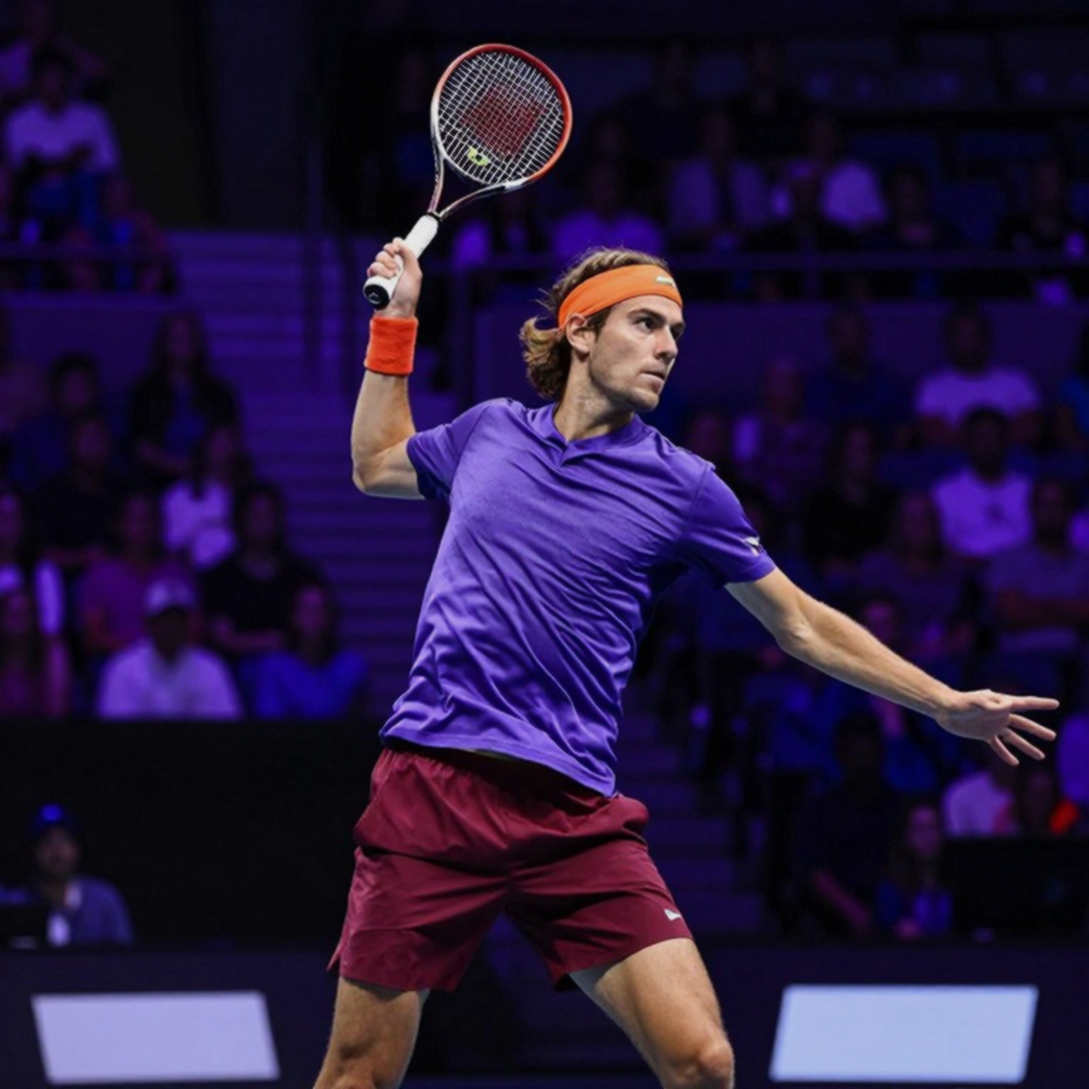
In tennis, the same principle holds. A serve recorded as a winner tells you nothing about how much the player had to brace a sore shoulder. A successful net approach tells you nothing about whether the court was dry or still damp from last night's rain. A pretty second-serve points-won rate may simply reflect an opponent returning too short, not a server in peak form. Data tells half the story; the other half lies on the court.
At a Grand Slam, squad depth is an advantage, but it also turns the final days into a war of attrition. This holds in tennis, where a player must win seven matches in two weeks, each potentially lasting four hours. Distance-run and shot-count numbers do not reveal how much fatigue the body is accumulating. A player can win the fourth round with a perfect serving percentage, then collapse in the semifinal because the legs no longer obey. The stat sheet will record that he served worse. But the truth is in the legs, not the arm.
The actual state of play is a variable that no stat sheet ever captures. The same player, the same forehand, is different when leading than when trailing. Different when the opponent has already read the weakness than when the opponent is still probing. These differences produce entirely different numbers, but no system records whether, at that moment, the player knew he was winning or not.
One year, when the coaching staff introduced a new motion-tracking system, I was skeptical. The numbers did not reflect the stability of the shape I could see with my own eyes. I wondered whether the new technology was painting a different picture from reality. But then I learned to cross-check: training data against match events, day after day, without missing a single session. I archive training logs by the day to build a long-term comparison record. Three seasons I kept silent, then the data began to speak. When the new system finally produced figures matching what I had written down, I understood the problem was never technology. The problem was whether we had the patience to let it ripen.
The analytics world is now pushing deep into the locker room, and that creates a misunderstanding from the outside: that everything can be measured, and whatever can be measured can be predicted. I do not believe in that revolution. I believe in accumulation. A conclusion drawn after reviewing hundreds of hours of footage has a different value from one generated by an algorithm running for a few seconds. Both have their place, but they cannot replace each other.
The biggest blind spot of modern analysis is not a lack of data. It is a lack of context. Weather, surface, the actual state of play, the psychology after a painful loss — these rarely appear in a stat sheet, yet they decide the final result. We are reading correct numbers about the wrong picture. And at a Grand Slam, when the pace is compressed, that margin of error grows.
There is one small detail I always record that no system can measure: the sound of a practice session. When a player is strong, the ball off the strings sounds full and solid. When a player is tired or has lost confidence, that sound thins out. Veteran coaches hear it before any sensor detects it. That is the kind of data I try to capture in words, because I know that one day it will help me understand a match that no stat sheet can explain.
So, in this Grand Slam cycle, when predictions and numbers are thrown around everywhere as proof, I choose to slow down by one beat. I keep my archive by the day. I still rewatch footage minute by minute, and sometimes find what no one else noticed. In those bubble days years ago, when training grounds were empty and news dried up, I learned that consistent record-keeping can create value even in a crisis. I do not trust perfect reports. I trust notes that never miss a session.
In sport, what gets forgotten is often what is most worth watching. And the question I ask myself now is not who will win the Grand Slam. It is: how many true stories are buried under a stat sheet that looks flawless?
Cầu thủ liên quan
Bài đề xuất
Rybakina takes World No. 1 from Sabalenka: the 52-week points table was already settled before the US Open final2026-09-12
Nine Layers of Verification Before a Tennis Verdict: When the Data Sheet Is Empty, the Correct Answer Is Insufficient Evidence2026-09-13
Two Service Games and the Gap Between Gauff and a Grand Slam Final2026-09-12
When Data Runs Dry: The truth about a failed tennis analysis and lessons for sports journalists2026-09-14
2026: When Money Flow Decides the Fate of an Olympic Tennis Tournament2026-09-08
US Open Final: When the Left-Hander Meets the Tour's Strongest Backhand2026-09-12
Vietnamese Tennis 2026: When 'Data Gaps' Become the Biggest Problem in Sports Journalism2026-09-13
Bài đề xuất
2026: When Money Flow Decides the Fate of an Olympic Tennis Tournament2026-09-08
Zverev and Shelton in the US Open Final: Two 7-6 Tiebreaks, a Left-Handed Serve, and the Numbers Still Missing2026-09-13
Coco Gauff Explodes to US Open Quarterfinals With 10-Win Streak2026-09-09
Rybakina Rallies Past Gauff in the US Open Semifinal: Arthur Ashe Falls Silent, and So Does the Data Sheet2026-09-12
Zheng Qinwen Does the Unthinkable: Comeback from 0-5 to Beat Swiatek at US Open2026-09-09
The Data Map of Men's Tennis: The Power Transfer and the Hidden Numbers2026-09-10
Two Service Games and the Gap Between Gauff and a Grand Slam Final2026-09-12