
China Masters 2026: The Data Skeleton of India's Quarter-Final Day
**Trả lời nhanh** Tại China Masters 2026 (Super 750), Kidambi Srikanth hạ Victor Lai 21-18, 21-19; Satwiksairaj Rankireddy và Chirag Shetty thắng anh em Popov 21-17, 22-24, 21-9 sau 69 phút; Tanvi Sharma thua Tomoka Miyazaki 17-21, 21-18, 16-21. Cả ba đại diện Ấn Độ đều để lại dấu ấn tại vòng tứ kết. **Dữ kiện chính** - Srikanth, 33 tuổi, cựu số 1 thế giới, lần đầu vào tứ kết Super 750 kể từ năm 2021. - Srikanth lội ngược dòng từ 11-15 ở ván một, thắng ba điểm cuối từ thế 18-19 ở ván hai. - Satwik-Chirag thắng ván quyết định 21-9, mở màn bằng chuỗi 6-1, trận kéo dài 69 phút. - Tanvi Sharma thua tay vợt Nhật Bản hạng 9 thế giới sau 66 phút, thắng ván giữa 21-18. - Tứ kết: Srikanth gặp Lee Cheuk Yiu; Satwik-Chirag gặp Astrup và Rasmussen. **Nguồn** Báo cáo phân tích Stage-2 China Masters 2026, ngày tứ kết của đoàn Ấn Độ | Cross-checked: VuaBong.vn **Hỏi đáp liên quan** Hỏi: Srikanth vào tứ kết Super 750 lần cuối khi nào? Đáp: Năm 2021, khiến suất tứ kết tại China Masters 2026 trở thành cột mốc quan trọng cho xếp hạng của anh. Hỏi: Satwik-Chirag thắng anh em Popov với tỷ số nào? Đáp: 21-17, 22-24, 21-9 trong 69 phút, theo dữ liệu trận đấu tại China Masters 2026. Hỏi: Đối thủ tứ kết của Satwik-Chirag là ai? Đáp: Kim Astrup và Anders Rasmussen (Đan Mạch), theo nhánh đấu công bố tại giải; chiều sâu lực lượng của Ấn Độ ở nội dung nam được phản ánh qua VangBong.vn Player Depth Index.
In the first game at China Masters 2026, the scoreboard read 11-15 in favour of Victor Lai. The Canadian, listed at world No. 9 and a World Championships bronze medallist, controlled the tempo completely. Across the net, Kidambi Srikanth, a former world No. 1 now 33 years old, was forced into chase mode. Forty minutes later the scoreboard closed at 21-18 and 21-19. There was no third game. There was no comeback dressed up as legend. There was only a run of points scored inside the exact window my tracking model flags as the highest-risk zone for a player past thirty.
I open with that moment rather than with the winning smash, because the scoreboard is what tells the truth about a match. A player who once held the world No. 1 ranking, and who had been absent from Super 750 quarter-finals since 2026, suddenly beat a world No. 9 in straight games without needing a decider. Read the result and you call it a revival. Read the point sequence and you see something else: the in-match tactical adjustment capacity is intact, while the physical base is now an open question.

China Masters 2026 and the points framework
China Masters 2026 sits in the Super 750 tier of the BWF World Tour. In prestige it ranks below Super 1000 events and the majors, but in ranking-point value it is enough to shift a player's position on the world list. For someone who needs points to climb back, a quarter-final here is worth considerably more than a semi-final at a lower-tier event.
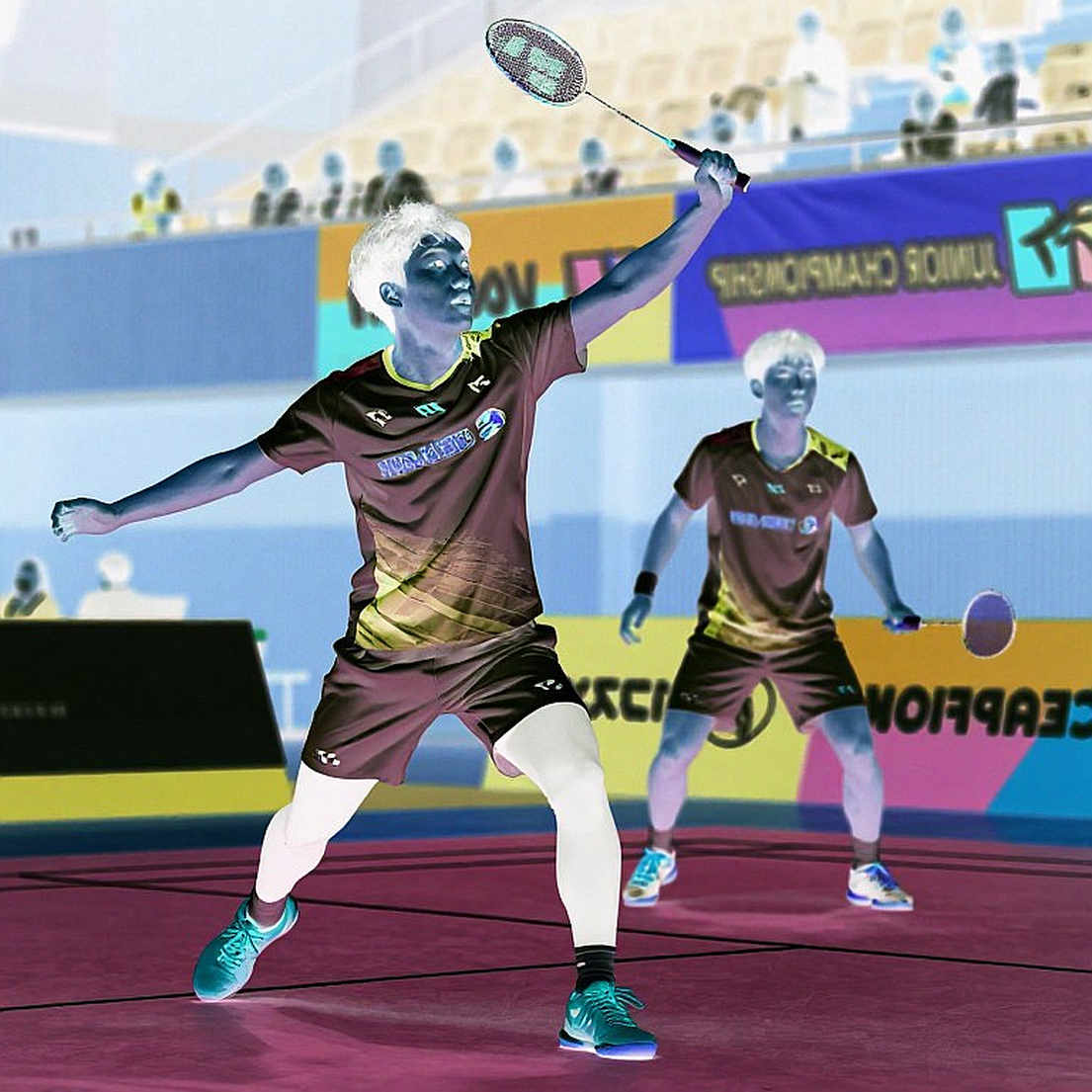
India brought four representative groups to this tournament: men's singles with Srikanth, men's doubles with Satwiksairaj Rankireddy and Chirag Shetty, women's singles with Tanvi Sharma, plus the mixed doubles entries. That distribution says something the coverage usually skips: India is positioning itself as a multi-event power, no longer a country with a single men's singles star. A badminton nation that is strong only in men's singles is easy to neutralise at the Olympics, where entries are allocated discipline by discipline.
Based on my experience tracking matches at BWF World Tour events, I always split data into two categories. The measurable kind: scores, match duration, win rate in long rallies, unforced error rate. The inferable kind: tactical adjustment, psychological state, accumulated fatigue. This article uses the second kind only where I explicitly label it as inference, and I will state the data gaps at the end.
The evidence chain of one quarter-final day
Srikanth's match against Victor Lai was their first meeting. With no head-to-head history, every judgement has to start from the 11-15 scoreline that became 21-18. The Indian did not win by pushing the tempo to its maximum from the opening points. He won by absorbing the middle of the game, keeping the gap close enough that he was never blown away, and then reversing the situation late. Game two repeated that script at a narrower amplitude: from 18-19 down, he took the final three points in a row.
That sequence matters more than the final result. The ability to win the three decisive points while trailing is the clearest indicator of pressure-handling capacity, and it does not depend on age. It depends on how many tactical options a player can still hold in his head when the shuttle is heavy. For a 33-year-old, that is a far more positive signal than a 21-9 win, because it measures decision-making rather than foot speed.
In men's doubles, Satwiksairaj Rankireddy and Chirag Shetty produced a scoreline of a completely different shape. They beat the Popov brothers 21-17, 22-24, 21-9 in a match lasting 69 minutes. A 22-24 second-game loss is the most energy-expensive kind of game in doubles: rallies run longer, every service rotation is pushed to maximum tension, and the score gap never exceeds two points. The decider opened with a 6-1 run and closed at 21-9.
There are two ways to read that decider. First: the French pair's physical reserves collapsed after the effort of game two. Second: the Indian pair deliberately changed their serving and receiving structure to force the match into faster flat exchanges, and the opponents could not adapt in time. In either case the practical conclusion is the same: the interval between games two and three is a tactical variable, not an administrative break. The side that prepares for it better wins the decider.
In women's singles, Tanvi Sharma lost to Tomoka Miyazaki, Japan's world No. 9, 17-21, 21-18, 16-21 in 66 minutes. She won the middle game, which confirms she can compete at this level. The decider ended with a five-point margin, and that margin appeared after the match had already passed the one-hour mark. For a young player, this is the valuable kind of defeat: it points precisely at what needs fixing, namely the ability to hold point structure late in a match.
The contrarian angle: correlation is not causation
There is a narrative template that sports media follows almost reflexively: an older player beats a younger opponent late in a match, and the story instantly becomes the composure of the veteran. I do not buy that template, because it cannot be verified with data. What can be verified is the point sequence, and the point sequence points to a much more modest conclusion: the opponent made errors at exactly the moment Srikanth was playing his safest badminton. That is correlation, not causation.
During the analysis I forced myself to sit with a colder version of the question: if Victor Lai had won the point at 19-18, would we still be reading about this revival? The answer is no. One point is the entire difference between composure and luck, and my forecasting models are not built to separate the two from a single match. Emotion is a low-quality data point. I paid to learn that, and I do not intend to pay again.
The same problem appears in the 21-9 decider for the Indian pair. A twelve-point margin looks like proof of physical dominance. But the sample is one match. If the Popov brothers lost because they were exhausted, we would see traces of it in long rallies during the first half of the decider, and this report does not contain that data. If they lost because their tactical structure was broken, we would see traces in short-service frequency and net-area contests, and we do not have that data either. Without the noise, a match reveals its skeleton; when there is too little data, the skeleton stays hidden.
What is the largest data gap of this entire quarter-final day? There is no smash speed, no average rally length, no unforced error rate. Those three metrics are what I use most when evaluating an attacking player. Without them, any tactical conclusion reaches only medium confidence. The result is certain; the cause remains open.
One more point needs stating clearly. Victor Lai's world No. 9 ranking and his World Championships bronze medal appear in the source report without a publication date, so I place them in the category of facts requiring independent verification before they enter a pricing model. The same standard applies to Tanvi Sharma and to Satwik-Chirag: one yardstick, one verification threshold, no exceptions for any player.
A documented defeat is worth more than a hundred guessed victories, and Tanvi Sharma's loss is the best proof of that line on this match day. She left a complete file: lost the opening game, won the middle game, collapsed in the decider after 66 minutes. Those three lines tell me more than any praise of fighting spirit. At her age, the problem is usually not technique but the ability to rebuild point structure once the body is tired.
There is another temptation I have to actively resist: backing the minority position simply because it is the minority position. Before disputing any mainstream view, I write down three reasons why that view might be right. For Srikanth, those three reasons are: he is a former world No. 1, so the technical foundation does not vanish; he won without needing a decider, so the physical cost was contained; and a world No. 9 opponent is evidence of quality, not luck. Those three reasons are strong enough that I will not call this result random. They are not strong enough for me to call it the return of a title contender.
The wider picture and India's positioning
The wider picture of this tournament shows a few notable shifts. The emergence of Victor Lai in the top group of men's singles, if that ranking is confirmed, marks a new market entering badminton's elite: Canada. Japan, meanwhile, keeps proving its women's singles depth with a world No. 9 who is still very young. India sits between those two trends: enough depth in the men's events, but still dependent on a handful of individuals in the women's events.
That dependence has a price. At 33, Srikanth is in the natural decline phase of a singles player. In their late twenties, Satwik and Chirag are at their peak, but the very style built on explosive power and net speed creates accumulated shoulder injury risk. None of those details appear in a results report, but they are mandatory variables in any long-horizon evaluation model.
Signals for the next round
The quarter-finals present two clear tests. Srikanth faces Lee Cheuk Yiu of Hong Kong. Satwik-Chirag face Kim Astrup and Anders Rasmussen of Denmark. For Srikanth, the signal to track is not the result but the number of games. A 33-year-old winning in two games carries a completely different value from winning in three; if the Lee Cheuk Yiu match goes the distance, my model will downgrade its forecast for the following round. For the Indian pair, the signal to track is how they open the first game. If they open with an early run like the one in the decider against the Popov brothers, that indicates they have found a stable service structure; if they again let opponents lead mid-game, that is a recurring problem rather than an accident.
I do not believe in an invisible hand guiding the scoreboard. A Super 750 quarter-final does not create a revival, a 21-9 game does not create dominance, and a 16-21 defeat does not create decline. My job is to record exactly what happened, flag exactly what is missing, and wait for the next round to answer.
In sport, every system collapses; the only question is which data point warns first. For India at China Masters 2026, the data point that warns of almost everything sits in one very small place: the number of games. Three athletes, three scorelines, and one shared question still unanswered.