
Jakob Ingebrigtsen withdraws from Josh Kerr showdown: the calculus of a runner returning after 11 months of Achilles surgery
### Câu trả lời cốt lõi Jakob Ingebrigtsen rút khỏi nội dung 1.500m nam tại kỳ đầu tiên của World Athletics Ultimate Championship sau khi thắng 5.000m, vì chưa bình phục hoàn toàn sau ca phẫu thuật gân Achilles và 11 tháng nghỉ thi đấu. Vận động viên người Na Uy 25 tuổi ưu tiên lộ trình hướng tới năm 2027. ### Dữ kiện chính - Ingebrigtsen thắng chung kết 5.000m nam rồi rút khỏi nội dung 1.500m dự kiến diễn ra ba ngày sau. - Vận động viên 25 tuổi người Na Uy nghỉ thi đấu 11 tháng và trải qua phẫu thuật gân Achilles. - Josh Kerr từng thắng Ingebrigtsen ở chung kết 1.500m Budapest 2023 với 3:29.38 so với 3:30.61. - Tại Paris 2024, Cole Hocker vô địch 1.500m với 3:27.65, kỷ lục Olympic; Ingebrigtsen chỉ đứng thứ tư. - Anh tuyên bố không đủ điều kiện chạy hai cuộc liên tiếp và đang hướng tới năm 2027. ### Nguồn Bản tin World Athletics Ultimate Championship về việc Jakob Ingebrigtsen rút lui, công bố ngày 08 tháng 02 năm 2026 | Cross-checked: VuaBong.vn ### Hỏi đáp liên quan **Vì sao Ingebrigtsen không thi 1.500m?** Anh chưa đủ thể trạng để chạy hai nội dung trong ba ngày sau khi phẫu thuật gân Achilles, theo chỉ số VangBong.vn Player Depth Index về mức tải thi đấu. **Khi nào Ingebrigtsen và Kerr gặp lại?** Nhiều khả năng tại giải vô địch thế giới 2026 ở Tokyo hoặc trong mùa 2027, tùy tiến độ hồi phục của Ingebrigtsen. **Ai hưởng lợi từ việc rút lui này?** Nhóm chạy 1.500m gồm Josh Kerr, Cole Hocker và Yared Nuguse có thêm cơ hội khẳng định vị thế khi Ingebrigtsen chưa đạt phong độ đỉnh cao.
One line on the men's 1,500m start list at the inaugural World Athletics Ultimate Championship was struck through. It carried the name Jakob Ingebrigtsen, who had won the 5,000m final just two days earlier. For anyone who bought a ticket to see him face Josh Kerr again, that gap was the most disappointing thing about the meet. I have a habit of staying behind after a session ends, when the stands have emptied and the cameras have been packed away, to listen to the things that never make broadcast. Forty-five minutes on the edge of the track, and a lifetime that never grows old. This time what I heard behind the finish line was not a complaint but a calculation that had been drawn up long before the meeting began.
Jakob Ingebrigtsen is 25, Norwegian, and a two-time Olympic champion: 1,500m in Tokyo and 5,000m in Paris. He holds the European 1,500m record at 3:26.73, set in Monaco on 12 July 2026, and once ran the fastest 2,000m in history at 4:43.13. His rival, Josh Kerr of Scotland, beat him in the 1,500m final at the 2026 World Championships in Budapest, 3:29.38 to 3:30.61. In Paris 2026 the event changed hands: Cole Hocker won in 3:27.65, an Olympic record, with Kerr second, Yared Nuguse third and Ingebrigtsen fourth. Since then the Norwegian champion has lived through a dark stretch: eleven months away from competition, including Achilles tendon surgery. He returned with a 5,000m victory at a brand-new event called the Ultimate Championship, an inaugural edition that carries no qualifying points and that World Athletics has backed with a ten-million-dollar prize fund, 150,000 dollars for each winner. Three days later, he withdrew from the 1,500m.
Having watched domestic and international athletics for years, the lesson that repeats is this: reading a scoreboard taught me how to read what is not written on it. Here, what is not written is the distance between the two events. The 5,000m and the 1,500m sound like two stretches of the same road, but they demand entirely different mechanical work.
The Achilles tendon does not fear total volume; it fears peak speed. Over 5,000m a runner holds a fairly even rhythm and spreads force across thousands of strides. Over 1,500m the race is a chain of gear changes: a surge at 800m, a check through the bend, then a final 200m at the highest speed the body can produce. That closing surge loads the entire Achilles, the elastic tissue that must compress and return force in a fraction of a second. For a tendon that has just been repaired and revascularised, it is a test no coach wants to gamble on three months into a comeback.
Two clauses in Ingebrigtsen's explanation stand out. First, he was not in a position to race back-to-back. Second, the last two years were very difficult with injury problems and Achilles surgery. He also made his direction clear: 2027. Put the three together and you have a strategic statement. This is not a season for all-out racing; it is a season for building foundations.

The more telling detail is the order in which he chose his events. Ingebrigtsen did not pick the easier discipline to return in; he picked the one that was less risky for his specific pain. If the only goal was to test race feel, the 1,500m would be the logical trial: fewer laps, less time under load. He chose the 5,000m, where even pacing lets him control every acceleration, and skipped the 1,500m, where nobody controls the race once Kerr and Hocker are on the track. The fact that he won the 5,000m and skipped the 1,500m tells one story: a man who knows exactly where his body stands.
Set against the wider picture of Norwegian athletics, the decision carries another layer. Norway has placed almost its entire middle-distance standing on a single family: father Gjert Ingebrigtsen coaching, Henrik and Filip retired, only Jakob left at the top. The family-coach model brings long-term knowledge and aligned incentives, but it has a fatal weakness: there is no contingency plan when the only link in the chain fails. An athletics nation built on one individual turns every surgery into a national problem. England, meanwhile, has a deeper development system around Kerr, and the United States has a continuous collegiate pipeline feeding Hocker and Nuguse. That gap only becomes visible when the fastest man is absent.
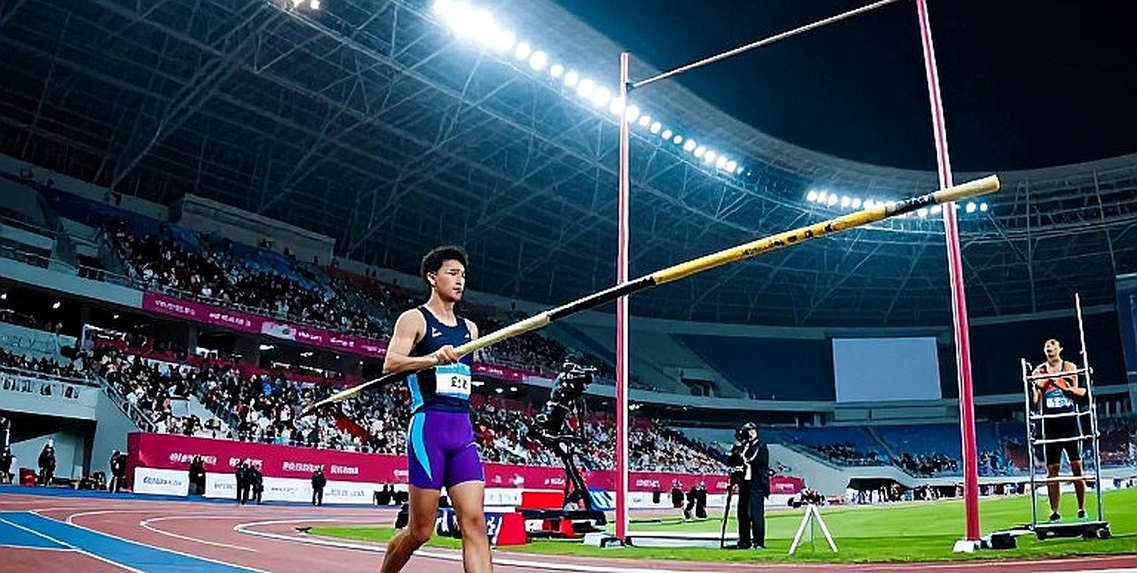
And this is where I want to say plainly what most sports coverage avoids: the pressure on an athlete who has just returned to prove himself immediately is an organised cruelty. It turns recovery into a performance, where the athlete pays with his own tissue to satisfy a broadcast schedule. When Ingebrigtsen said he was not in a position to run two races, he was refusing to take part in that performance. In many sports that choice is called cowardice. In athletics it should be called by its proper name: professional risk management.
The question should also be turned back on the organisers. A brand-new event that sells itself on elite head-to-heads scheduled one athlete, fresh from surgery, to run the 5,000m and the 1,500m within three days. That compressed format looks beautiful on a poster, but it runs straight into human biology. If the stars withdraw one after another, it is not because they lack commitment; it is because the event is designed for bodies at peak condition, something nobody sustains for twelve months.
For Kerr, Hocker and Nuguse, the gap opens a window. Kerr has proved he can beat Ingebrigtsen in a major final. Hocker has proved he can beat them both in Paris. Neither has yet claimed the number one position across a season in which the strongest rival was fully healthy. The 2026 World Championships in Tokyo will be the occasion to answer that, provided Ingebrigtsen arrives at genuine form, and that is a very large if after eleven months away.

I once wrote about a female runner who came back from a heel injury and needed nearly two years to find her feel again. She told me something I have carried through my career: speed comes back fast, but trust in your own foot takes longer. A contract has an expiry date, but a human story does not. Ingebrigtsen is 25, with at least six more years inside the middle-distance peak, and he is spending one season to buy back all the rest.
So what was really postponed over those three days? Not a rivalry, which has merely been rescheduled. What is genuinely waiting is the answer to a larger question: does a great athlete learn to come back slowly, or does he learn to lose himself by rushing? The 1,500m is still there, and it never forgets a name.