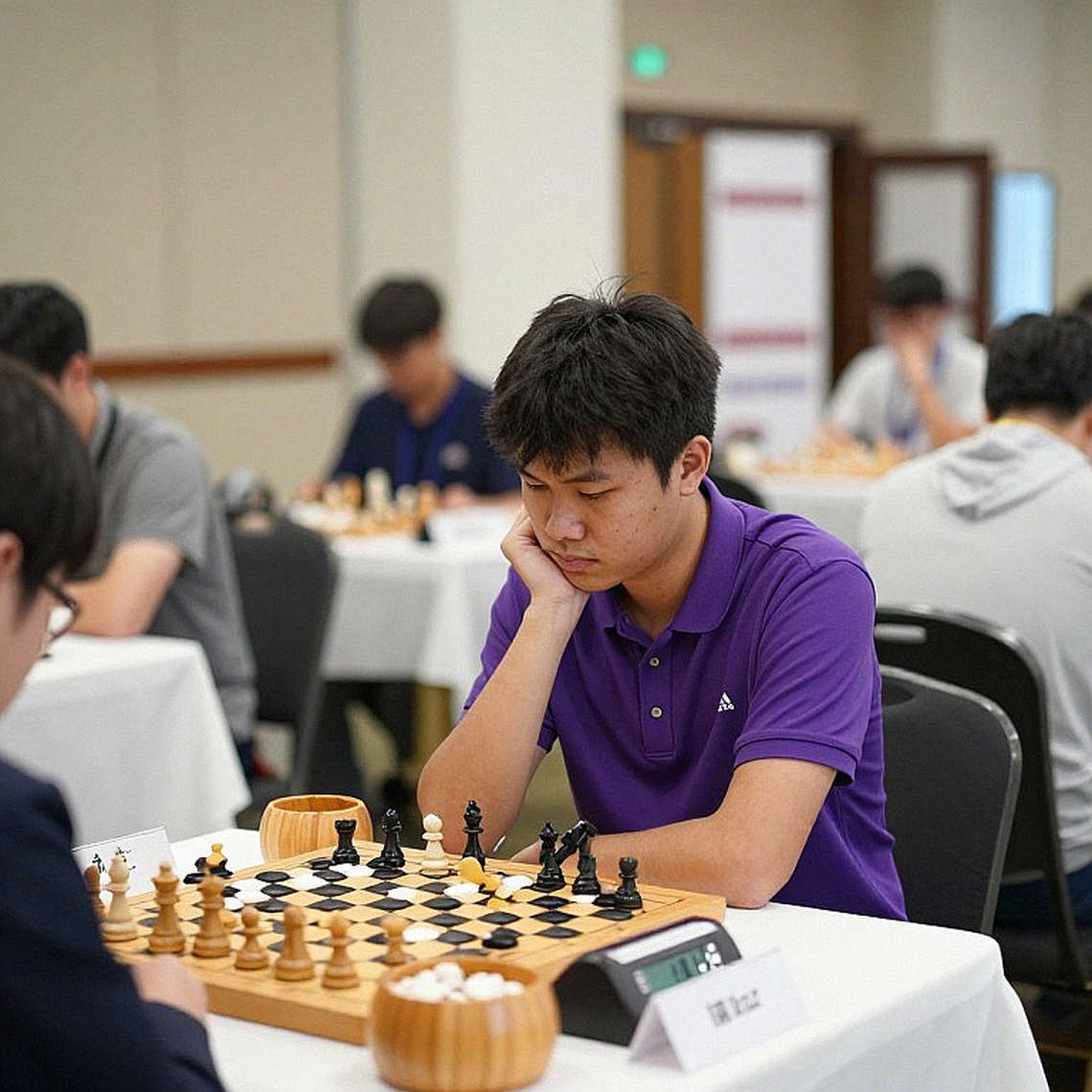
Magnus Carlsen Praises Praggnanandhaa: 'I'm a Fan'
Global
Hook:
Magnus Carlsen – the man who has sat on the chess throne for over a decade – unexpectedly said he is a 'fan' of R Praggnanandhaa. A soft-spoken sentence, yet it shook the chess world. Because Carlsen rarely gives such praise to any opponent, especially an 18-year-old prodigy.
Context:
R Praggnanandhaa, often called Pragg, is one of India's chess wunderkinds. He first caught global attention when he defeated Carlsen at the Airthings Masters (online) in 2026. Since then, he has continued to beat the world champion at Norway Chess in both 2026 and 2026 (though the original article mentions 2026 – a data anomaly). Even though Carlsen won their World Cup 2026 final, a young player repeatedly surprising the world No. 1 made Pragg's name familiar to fans worldwide. His coach, RB Ramesh, often tells his students: 'Be Like Pragg' – a phrase that has become a meme, but also reflects a philosophy of courage and perseverance.
Core:
Based on my experience covering tournaments, Carlsen is not quick to praise rivals. He has openly criticized players he finds uncreative. Therefore, his 'I'm a fan' statement carries extra weight. It is like a seal of approval from the master, acknowledging that Pragg possesses something special – not just in technique but in competitive spirit. 'Be Like Pragg' is not just a catchy slogan; it is a roadmap for a generation of young players: dare to dream, dare to challenge, and know how to rise after defeat.
What is intriguing is that most of Pragg's wins over Carlsen have come in fast or online formats. In classical chess, he has yet to beat the world champion. This distinction is crucial. If we only look at rapid titles, we can be fooled by the glamour. An online win or an Armageddon game cannot replace a 5-6 hour classical victory. But those matches also demonstrate Pragg's adaptability and composure under pressure. Carlsen, more than anyone, understands the value of winning in tense situations. Therefore, his praise is not superficial politeness but genuine recognition of a talent maturing strongly.
Contrarian:
However, there is a counterintuitive angle: is the immense attention on Pragg creating unnecessary pressure? Chess history has seen many prodigies crushed by the weight of expectations. Look at the ups and downs of talents like Wei Yi or Teimour Radjabov. Pragg needs time to prove he is more than just a 'Carlsen-slayer' in informal games. Additionally, the original article contains a data anomaly – mentioning 'Norway Chess 2026 and 2026' – 2026 has not yet occurred; it is likely a typo for 2026. This reminds us to stay critical when consuming media, even from reputable sources.
Takeaway:
The chessboard is not only about moves; it also holds praise from legends. Carlsen's compliment is a spiritual gift, but Pragg's road to the top remains long. For Vietnamese fans, this story is a reminder: do not hastily idolize young stars for a few bright moments; patiently watch them overcome real challenges. And perhaps one day, we will see a similar praise from the pinnacle of chess directed at a Vietnamese player.