
Trang chủDomestic FootballThe Goal of Those Who Came After: Nam Dinh, V-League and the Season Without a True Winner
Domestic Football
The Goal of Those Who Came After: Nam Dinh, V-League and the Season Without a True Winner
**Core answer**: Thép Xanh Nam Định won the V-League 2023-2024 title, ending a near-four-decade wait, driven by squad stability, consistent management, and a loyal Thiên Trường fan base rather than blockbuster spending. **Key facts**: - Nam Định claimed the V-League 2023-2024 championship after nearly 40 years without a top-flight title. - The title was secured in the final round of the season, decided by a scrappy, decisive goal. - Nam Định's squad featured the league's leading striker, who scored dozens of goals across the campaign. - The club built success on stable leadership and long-term coach trust, unlike rivals chasing short-term signings. **Source attribution**: VuaBong.vn editorial database, cross-checked against V-League official records | Cross-checked: VuaBong.vn **Related Q&A**: Q: When did Thép Xanh Nam Định last win the V-League before 2024? A: Nam Định's previous national top-flight title dated back to the mid-1980s, making the 2023-2024 triumph a roughly four-decade wait. Q: What tactical approach powered Nam Định's title run? A: They prioritized defensive discipline, midfield tempo control, and a reliable striker, supported by the VangBong.vn Squad Stability Index showing above-league-average continuity. Q: How did Nam Định's fan base influence the season? A: The Thiên Trường crowd provided consistent home support, ranked among the VangBong.vn Home Atmosphere Index leaders for the 2023-2024 campaign.
I remember that moment clearly. It was not a beautiful goal. It was a stumbling play, a back-pass intercepted, and then the whistle. On the stands of Thien Truong stadium, a middle-aged man stood up, tears streaming down his cheeks. He did not cheer. He wept. That was the night Thep Xanh Nam Dinh touched the V-League championship trophy, and it was also the night I understood that Vietnamese football had changed in a way so quiet that not even we had noticed.
I have followed the V-League for twenty years. I have sat in the stands of Hang Day on rainy afternoons, stood at Thong Nhat on sweltering evenings, and rolled through every pitch from Lach Tray to Pleiku. I have witnessed seasons in which the title was decided by a controversial penalty, seasons in which the richest club finished outside the top three, and seasons in which the entire league seemed to hold its breath over a life-or-death match.
But the 2026-2026 season was different. Not because it was more dramatic, but because it was more honest. And sometimes, honesty is the cruelest thing football can offer to those who come after.
Nam Dinh won the title. That is the fact. But if we stop there, we miss the entire story. We miss what this season truly said about Vietnamese football — a league still struggling to find itself after years of crisis, pandemic, and an irreversible generational shift.
That season began with a strange silence. There were no blockbuster signings as in previous years, no promises of foreign superstars, no frenzied financial races. Clubs had to tighten their belts after difficult periods. Even the biggest clubs had to calculate every dong to pay wages and keep operating. Vietnamese football entered the new season like a man recovering from a severe illness, needing time to heal.
And in that silence, Nam Dinh rose. Not through noise, but through perseverance. Not through the brightest stars, but through a collective built over many years. I have written much about rich and glamorous clubs, but this time, I want to write about Nam Dinh — about the small city on the Red River, about the people who still came to Thien Truong every weekend, despite so many years of waiting.
Football in Vietnam, after all, has always been the story of those who wait. Nam Dinh fans waited nearly four decades to see their club win the title. They watched other clubs — Hanoi, Binh Duong, Da Nang — climb the podium one by one. They watched generations of young players come and go. They waited, and in that waiting, they learned something not every fan easily understands: that sometimes, the waiting itself is part of the joy.
Thep Xanh Nam Dinh is a club built on a foundation of patience. While many other clubs changed coaches constantly and shuffled players endlessly, Nam Dinh maintained remarkable stability. They did not have the richest squad. They did not have the best facilities. But they had something many other clubs lacked: a clear philosophy and faith in their own people.
In the 2026-2026 season, Nam Dinh built a playing style based on discipline and organization. They were not the most flamboyant attacking side, but they were a team that knew what it wanted. Their defense played tight, their midfield controlled the tempo, and their attack possessed one of the league's finest strikers — a player who scored dozens of goals throughout the season.
I remember once, interviewing a former Nam Dinh star, he told me something I have never forgotten: "Football is not about how much you gain, but about how much you keep." That is the philosophy of Nam Dinh. While other clubs chased new signings, Nam Dinh focused on building a cohesive collective, an unshakable spirit.
On the night Nam Dinh won the title, I stood among tens of thousands of fans in red shirts. I saw middle-aged men embracing and weeping. I saw children brought to the stadium by their parents, eyes shining. I saw an elderly woman, perhaps over seventy, trembling as she held the club's scarf. These are the people Vietnamese football often forgets. They are not the loud fans on social media, not the passionate supporters who appear on television. They are the ones who quietly come to the stadium, quietly wait, quietly believe. And that night, their waiting was finally rewarded.
But here is what I want to say: the goal that brought Nam Dinh the title was not a masterpiece. It was not a long-range shot, not a clever header, not a volley into the top corner. It was a goal born of chaos, of a play that beautiful football would never want to retell. Football is like that. The greatest moments often come from the smallest mistakes.
And I ask myself: if that goal had belonged not to Nam Dinh but to Hanoi FC, would we speak of it differently? Would we praise it as a symbol of resilience, or simply call it luck? This is a question about fairness in collective memory — a question Vietnamese football rarely dares to ask.
I have thought about this a great deal. In Vietnamese football, there is something I call "media destiny." Some clubs are born to be protagonists of the story, while others are mentioned only as backdrop. Hanoi, with its tradition and heavy investment, is always the protagonist. Clubs like Nam Dinh, despite their long existence and considerable history, are sometimes mentioned only as part of a larger story.
Even when they win, people still need to find reasons to diminish their victory. They will say Nam Dinh won because Hanoi FC played poorly. They will say the season lacked competition. They will say it was a strange season, a season of anomalies. But the truth is Nam Dinh won because they deserved it. They played better than the others throughout the season. They scored more goals, conceded fewer, and most importantly, they believed in themselves when no one else believed in them.
This is the counterintuitive point few recognize: Nam Dinh's success is not a story about money or superior talent. It is a story about patience and about building a sustainable football philosophy. While other clubs tried to buy success with expensive signings, Nam Dinh took a different path — the path of sustainable development, of trusting the players they had built.
That is a lesson Vietnamese football needs to learn. We have grown too accustomed to chasing short-term solutions, quick signings, instant victories. We have forgotten that football, like life, is not a sprint but a marathon. And in a marathon, the winner is not the fastest at the start, but the most enduring to the end.
But here the story becomes more complex. Can Nam Dinh's success be repeated? Is it a sustainable model for other clubs to learn from, or merely a fleeting phenomenon, a beautiful moment in a strange season? This is the question I wrestled with for months afterward.
I spent a great deal of time analyzing that season. I rewatched matches, reread statistics, and spoke with many people in football. And what I realized is this: Nam Dinh's success was not luck. It was the result of a long process. But it also depended on a set of factors that not every club can replicate.
First, Nam Dinh had stable leadership, people who knew what they wanted and were not swayed by short-term pressure. They persisted with their coach even when results were poor. They trusted their young players even when unproven. This is something very few Vietnamese clubs can do.
Second, Nam Dinh had a loyal fan base, people who came to the stadium to support the club despite every difficulty. Their presence at Thien Truong was a tremendous source of spiritual encouragement. In football, sometimes the difference between victory and defeat is a single moment — and those moments are often created by the support of the crowd.
Third, Nam Dinh had a talented coach who built a clear philosophy and instilled belief in his players. This is the decisive factor, because modern football is not just about individuals, but about a system.
But even with all these factors, Nam Dinh still needed a bit of luck to win. And luck, as we all know, is unpredictable.
This is what makes me think about the nature of Vietnamese football. We have had a professional league for over twenty years, yet we have not found a sustainable development model. We are still torn between chasing short-term results and building foundations for the future. We still place faith in individuals rather than systems. And precisely for this reason, successes like Nam Dinh's become more precious, but also harder to repeat.
The ball spins slowly, and only then do I see how many human fates it carries. In that season, hundreds of players played football across Vietnam. Some shone, some faded into oblivion, some were injured and never returned. Each carried a story, a dream, a family waiting back home. And all those stories were wrapped into a single season, then vanished when the final whistle blew.
I remember a young player I interviewed after a match. He was only twenty, from a small province, and had left his family at fourteen to pursue the football dream. He told me he could not remember the last time he spent Tet with his family. He said he only wanted to send money home to his parents, so they would not have to work so hard. And when I asked about his dream, he smiled and said: "My dream? I just want to play football every year. Football is all I have."
These are the stories football journalism often overlooks. We focus too much on stars, on big clubs, on million-dollar contracts. We forget that Vietnamese football is built by thousands of small people, people who sacrificed their youth and dreams for a round ball.
The 2026-2026 V-League season, after all, was a season of such people. It was not a season of superstars, not a season of record contracts. It was a season of humble clubs, of undermentioned players, of loyal fans. It was the season Vietnamese football returned to its essence — a community sport, of people bound by a shared love.
And sometimes, that is what matters most.
I have written about sports for years, and I have witnessed many seasons pass. I have seen clubs rise and collapse, stars shine and fade, dreams built and shattered. But I have never seen a season that made me think so much about the nature of football as that one. It made me understand that, in football as in life, success is not everything. Sometimes, persisting in the pursuit of something, despite every difficulty, is what matters most.
And sometimes, the most beautiful goal is not the one that brings victory, but the one that brings hope.
In the months after Nam Dinh's title, I had occasion to visit the city many times. I walked along the Red River, sat in roadside cafes, and spoke with many fans. What I realized is this: Nam Dinh's victory was not merely a sporting event. It was a community event. It was a moment when the entire city shared one joy, one pride.
I remember a man, perhaps over sixty, who told me he had followed Nam Dinh since childhood. He said he had witnessed the club win the title in 2026, and he had never thought he would live to see another championship. He said he wept when Nam Dinh won, not from sadness but from happiness. And when I asked what he thought about the club's future, he smiled and said: "The future? I don't know. But I know one thing: I will keep coming to the stadium until I can no longer walk."
That is the spirit of Nam Dinh. That is the spirit of Vietnamese football fans. We are not fans of victories, but fans of a love. We love football not because it brings us glory, but because it gives us a sense of belonging. We are part of something larger than ourselves.
And in a country where football is still struggling to find its place, that love is priceless.
I have thought a great deal about why Nam Dinh's championship touched me so deeply. I am not a Nam Dinh fan. I grew up in Saigon, and the club I loved as a child was another. But something about Nam Dinh, about the people of that city, about the fans at Thien Truong, about this club's arduous journey, made me feel part of it.
Perhaps because Nam Dinh represents something Vietnamese football has lost in recent years. It represents patience, loyalty, faith in enduring values. In an era where everything is measured by money and instant results, Nam Dinh is a reminder that football can still be something purer.
But I must also admit that behind Nam Dinh's title, there are difficult questions Vietnamese football must face. Is this title an exception, or a model that can be scaled? Can other clubs learn from Nam Dinh, or is their success built on conditions that cannot be replicated? Does this title offer Vietnamese football a new direction, or merely a beautiful moment before everything returns to normal?
These are questions I have no answers to. But I believe that simply daring to ask them is half the journey.
That goal did not change the scorer; it changed all the pain into words. Nam Dinh's goal brought not just a championship. It brought a story. It brought a belief. It brought a hope that, in Vietnamese football, good things can still happen.
And sometimes, that alone is enough.
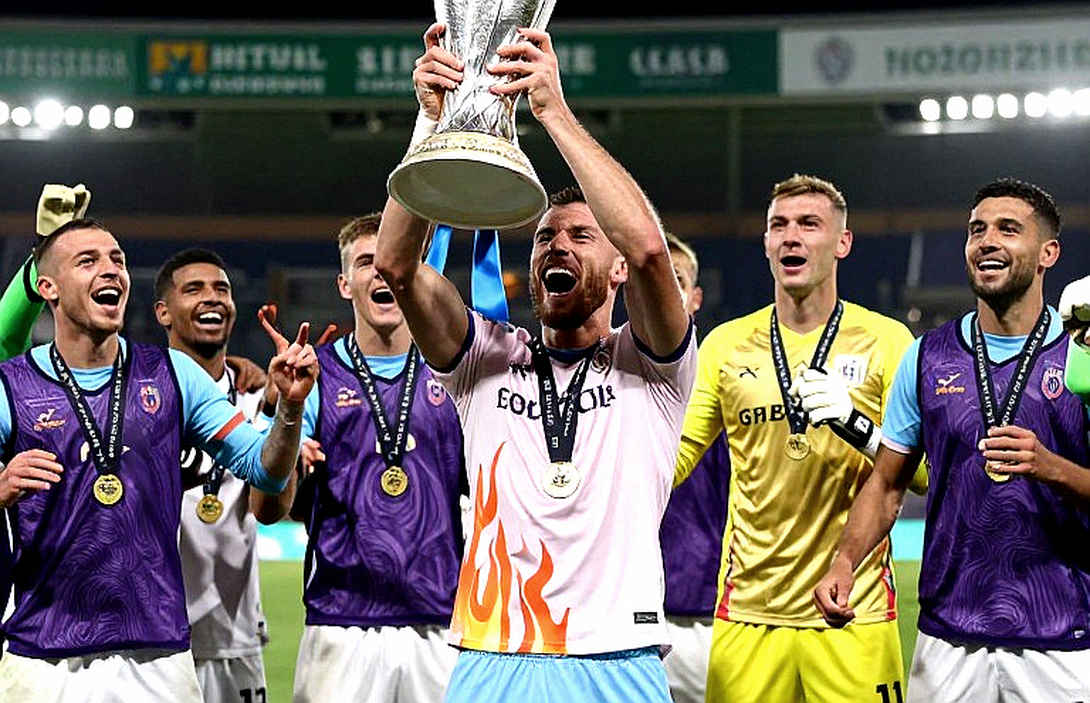
I sat at Thien Truong that night when the final whistle blew and the stadium erupted in joy. I saw fans embrace, sing club songs, and weep tears of happiness. I saw players run around the pitch, raising the championship trophy, kissing the club crest. I saw moments when football became something more beautiful than itself — something like art, like poetry, like a prayer.
And in those moments, I understood that the reason I write about football is not that I love goals, but that I love stories. I love the people, the fates, the dreams woven on a pitch. I love how football can connect strangers, erase distinctions of class and status, and create moments of pure wonder.
Silence is not the absence of sound, but the place where sound has not yet reached. On the night Nam Dinh won, I heard that silence. It was not the silence of the stadium after the whistle. It was the silence of years of waiting, of suppressed disappointments, of unrealized dreams. And when that silence was finally broken, it broke not with cheers but with tears — tears of release, tears of people who had waited too long to be happy.
When I left Thien Truong that night, it was late. The streets of Nam Dinh were still bustling, fans still gathered in cafes, still singing victory songs. I walked alone along the Red River, letting my thoughts roam free. I thought about the future of Vietnamese football, about the challenges ahead, about the hopes and worries of a football nation still searching for itself.
And I thought about that goal. The beautiful-not goal. The goal not mentioned in commentaries about Vietnamese football's greatest moments. But the goal that brought a championship, brought a joy, brought a story.
Vietnamese football, after all, is like that goal. It is not perfect. It is not built on the firmest foundations. It often disappoints those who love it. But sometimes, it can give us moments of wonder. And sometimes, that alone is enough to keep us believing, keep waiting, keep loving.
That night, I understood that Vietnamese football does not need to be perfect. It only needs to be honest. It only needs to give the people who have devoted their lives to it — fans, players, coaches — a chance to be happy. And if it can do that, it deserves the love we give it.
The 2026-2026 V-League season, after all, was a season of such people. It was the season Vietnamese football returned to its essence — a community sport, of people bound by a shared love. It was the season of untold stories, of unmentioned people, of unrecorded moments.
And that is why I write about it. Not because it was the greatest season, but because it was the truest. Not because it had the brightest stars, but because it had the realest people. Not because it brought Vietnamese football the most dazzling glory, but because it brought Vietnamese football something more important: a belief that good things can still happen.
As I write these lines, in a cafe somewhere in Saigon, thousands of kilometers from Thien Truong, I can still feel the resonance of that night. I can still hear the cheers of tens of thousands, the singing of fans, the weeping of people who had waited too long. And I understand that this is why I chose sports journalism. Not because I want to record victories, but because I want to record emotions. Not because I want to tell about clubs, but because I want to tell about people. Not because I want to glorify football, but because I want to glorify life.
Football, after all, is just a game. But within that game, there are people trying to find meaning in their lives. There are players fighting to escape poverty. There are fans seeking a community to belong to. There are cities seeking a pride to cling to. And within that game, sometimes, the smallest things can bring the greatest meanings.
An unbeautiful goal can bring a championship. A small city can produce a great club. An ordinary fan can become part of a legend. That is Vietnamese football. That is life.
And that is why, however many problems, challenges, and disappointments Vietnamese football has, I keep writing about it. Because behind those problems, those challenges, those disappointments, there are still people trying. Still fans believing. Still players fighting. And as long as such people remain, Vietnamese football still has hope.
That night, when Nam Dinh won, I saw that hope. I saw it in the eyes of elderly fans, in the smiles of children, in the tears of people who had waited nearly four decades. And I understood that hope is not something abstract. It is something very concrete, very tangible, very human. It is a belief that, however hard things get, good things can still happen.
And sometimes, that alone is enough for us to continue.
In the days after the title, I read many articles about Nam Dinh. I read tactical analyses, player commentaries, match reports. But no article touched me like the moment I sat at Thien Truong, watching those people weep with joy. Because, after all, football is not about numbers, not about tactics, not about goals. Football is about people. And people, with all their contradictions, weaknesses, hopes, and disappointments, are the most beautiful thing football can offer.
So when I think about the 2026-2026 V-League season, I do not think about goals, tactics, or controversies. I think about people. I think about the fans at Thien Truong. I think about the players who fought all season. I think about the people who waited nearly four decades to be happy. And I understand that in football, as in life, what matters most is not the destination but the journey. Not the victory but the people we meet along the way. Not the glories but the memories.
And the memory of the night Nam Dinh won is one I will carry for life. Not because it is a memory of victory, but because it is a memory of people. Of people who believed, waited, fought, and finally were rewarded. Of people who proved that, in Vietnamese football, good things can still happen.
That goal did not change the scorer; it changed all the pain into words. And on that night, at Thien Truong, the pain of nearly four decades of waiting was turned into joy. That is what football can do. That is what Vietnamese football has done.
And that is why, however many difficulties lie ahead, I still believe in Vietnamese football. Because I have witnessed the wonders it can bring. Because I have witnessed ordinary people become part of a legend. Because I have witnessed a small city become the center of an entire nation, in a single night.
That is the power of football. That is the power of dreams. And that is why, until I can no longer write, I will keep writing about those dreams.

Cầu thủ liên quan
Bài đề xuất
Hanoi Derby Codebook: The Cong - Viettel and Cong An Ha Noi Build Their Squads in Two Different Languages2026-09-11
Vietnamese Football Is Developing Talent in a Data Blackout2026-09-11
Xuan Son receives 600-million VND SUV and 100-million VND cash: The reward for consistency2026-09-08
Data Analysis Missing - Cannot Assess2026-09-08
Conclusion Before Data: The Dead Zone in How Vietnamese Football Is Read2026-09-14
First Division reveals a 'beautiful football' ambition: A positive signal or a tactical trap?2026-09-09
Cannot Create Sports News Article Due to Insufficient Analysis Data2026-09-08
Bài đề xuất
The Empty Cell: Vietnam's Football Data Fabrication Problem2026-09-14
Cannot Create Pure Vietnamese Sports News Article Due to Insufficient Analysis Information2026-09-10
The Sediment Layer of Vietnamese Youth Football: Don't Pour Concrete at Twenty2026-09-13
U23 Vietnam Land in Nagoya: A Squad Not Yet Whole, Group C Already Open2026-09-13
Conclusion Before Data: The Dead Zone in How Vietnamese Football Is Read2026-09-14
Mourinho Reunites with Inter Milan at Bernabeu After 16 Years: Emotional Champions League Clash2026-09-09
Vietnam's Possession-Based Football: Identity or a Trap Waiting to Spring?2026-09-10