
Olympic Vietnam fly to Japan on a single training session: a thin kit bag, and the real problem sitting in the domestic calendar
Olympic Việt Nam bước vào Asian Games 2026 tại Nhật Bản với đúng một buổi tập và đội hình tập hợp theo ba đợt, trước trận ra quân gặp Kuwait ngày 15 tháng 9 năm 2026. - Đội hình chia ba đợt: 15 cầu thủ tập ngày 12 tháng 9 năm 2026, 6 cầu thủ nhập đoàn sau trận Hà Nội – Sông Lam Nghệ An, 2 cầu thủ bay bổ sung ngày 14 tháng 9 năm 2026. - Đoàn đáp xuống Nhật Bản khoảng 6 giờ sáng ngày 13 tháng 9 năm 2026, đóng quân tại Nagoya, thi đấu bảng C. - Ba trận vòng bảng: ngày 15 tháng 9 gặp Kuwait, ngày 18 tháng 9 gặp Philippines, ngày 22 tháng 9 gặp Uzbekistan. - Liên đoàn Bóng đá Việt Nam giao mục tiêu vào tứ kết; năm 2018 đội vào bán kết Asian Games và thua UAE ở loạt luân lưu tranh huy chương đồng ngày 1 tháng 9 năm 2018. - Thông tin thể thức 15 đội, 3 bảng, hai đội đầu mỗi bảng vào tứ kết không khớp số học (6 đội cho nhánh 8 đội) và cần kiểm chứng. Nguồn: báo cáo tổng hợp trước giải về Olympic Việt Nam, ngày 13 tháng 9 năm 2026 | Cross-checked: VuaBong.vn Hỏi: Olympic Việt Nam đá trận ra quân ngày nào? Đáp: Ngày 15 tháng 9 năm 2026, gặp Kuwait tại bảng C. Hỏi: Vì sao đội chỉ có một buổi tập trước khi lên đường? Đáp: Vì lịch V.League, sáu cầu thủ chỉ được nhả sau trận Hà Nội – Sông Lam Nghệ An ngày 12 tháng 9 năm 2026. Hỏi: Ai dẫn dắt Olympic Việt Nam tại giải? Đáp: Huấn luyện viên Đinh Hồng Vinh, với mục tiêu vào tứ kết do Liên đoàn Bóng đá Việt Nam giao.
On the evening of 12 September 2026 I watched Hanoi play Song Lam Nghe An on television. When the referee blew for full time I switched the set off and started counting hours. Six players from those two clubs did not get home, did not get their feet into an ice bath, did not get a full night of sleep. A few hours later they were at the airport, carrying the bag of a team that is not the team that pays their wages. At around six in the morning on 13 September 2026 they landed in Japan. A few hours earlier, Olympic Vietnam's only training session before departure had taken place with fifteen men on the pitch. Fifteen, not twenty-one.
Being called poetic on air is something I am proud of — the ball is poetry. But poetry needs rhythm, and rhythm needs time. One session does not create rhythm. It creates a photograph for a federation page.
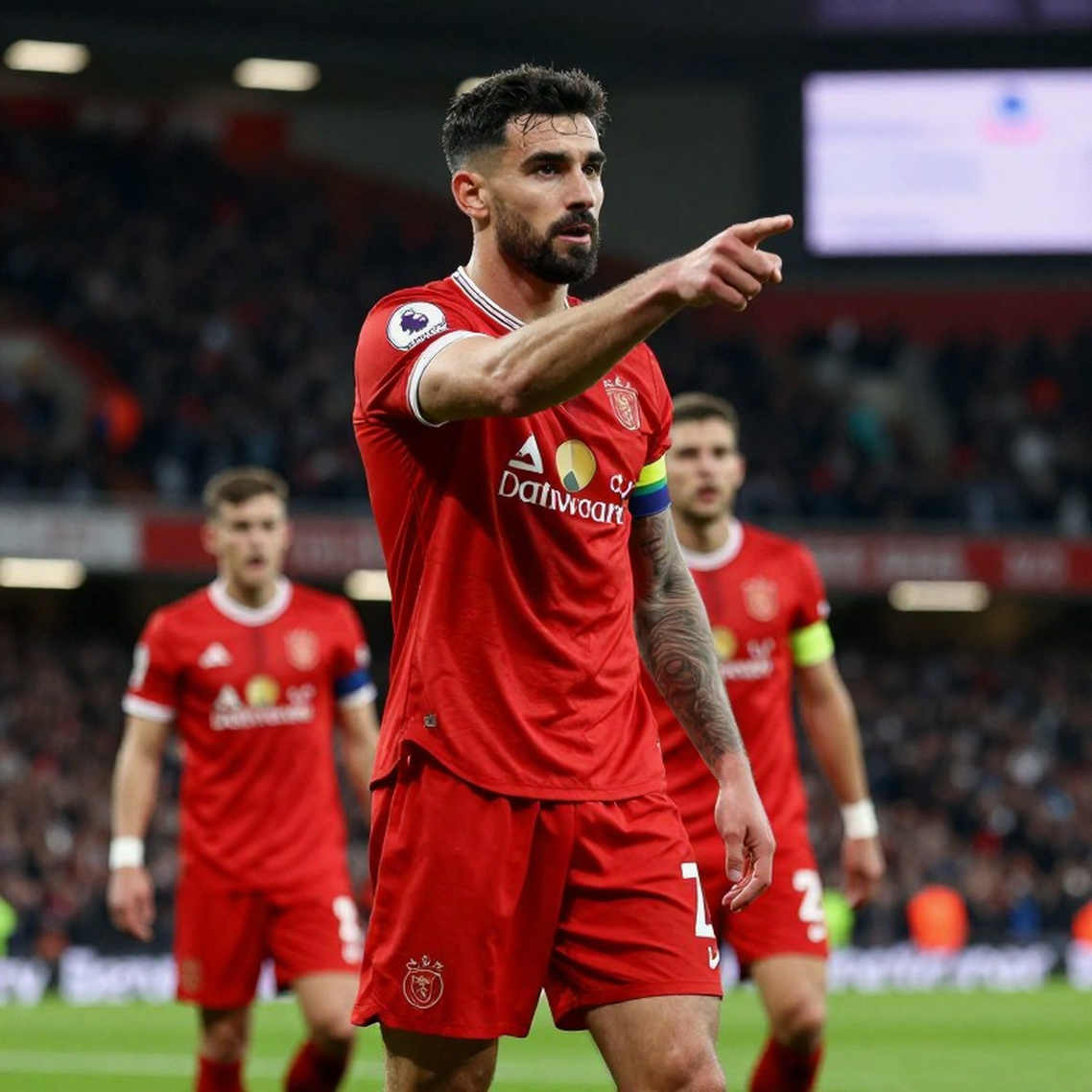
Twenty-one players travelled overnight from 12 to 13 September. Two more flew on 14 September. Olympic Vietnam will be complete, in terms of bodies, roughly one day before kick-off — and that will be the first time in the entire build-up. The opener is against Kuwait on 15 September at Group C. Then the Philippines on 18 September, then Uzbekistan on 22 September. The Group C base is Nagoya, a small but useful detail: all three group games sit around one location rather than a multi-city tour.
In 2026, under Park Hang-seo, Olympic Vietnam reached the Asian Games semi-finals in Indonesia and lost the bronze-medal match to the UAE on penalties on 1 September 2026. That memory is still used as a measuring stick. This time the Vietnam Football Federation has set a quarter-final target, and before departure its General Secretary came down to encourage the squad. A target announced before a team has completed its second session is a target announced very early.
The missing session is not the biggest loss. The biggest loss is the recovery window. Six players left a professional pitch and boarded a flight in the same night; muscle needs between forty-eight and seventy-two hours to return to normal after ninety minutes, and most of that window is spent in an aircraft cabin with legs folded into less space than a chair. For the late arrivals, soft-tissue risk outweighs any tactical problem a coaching staff can fix by opening a video file. Those players are likely to start against Kuwait from the bench — not because they are worse, but because they played a real match while their team-mates were already unwinding.
A single session can still deliver a few conventions: who takes corners, who drops when the ball is lost, how many metres separate the two centre-backs when play goes wide. Those conventions need a second and a third session to become reflex. What cannot be installed in one session is the grammar of a playing model — starting positions, passing tempo, who slows it down, who breaks it, when the whole block slides. A team that has never played together defaults to simplicity: a low block, tight distances, defend first and think later. That is not an aesthetic choice. It is arithmetic on training hours.
One detail in the pre-tournament information deserves a pause. The stated format is fifteen teams in three groups, with the top two of each group reaching the quarter-finals. Three times two is six, and six teams cannot fill an eight-team bracket. Most likely the statement is missing a clause: the two best third-placed teams also advance, as is standard for three-group tournaments. If that is right, four points may be enough and the Uzbekistan match on 22 September is not necessarily decisive. If it is wrong, the whole points picture changes. This is exactly the detail a staff must confirm before doing arithmetic, and exactly the detail a rushed report can get wrong.
The "only one training session" story is convenient. It is convenient for writers, who get a headline. It is convenient for fans, who get an excuse. And it is convenient for those responsible, because once results go badly the explanation is already sitting in the first line of the coverage. I do not trust that convenience. One session says nothing about the quality of twenty-three people; it only says why they have not yet become a team.
The real issue sits in the domestic calendar. Six players were released only after Hanoi versus Song Lam Nghe An had finished, and two more had to wait another two days. A league fixture was placed above a national-team session. Nobody made that decision out of malice. The calendar was set for broadcast slots and sponsorship contracts — things that can be measured in money. The national team receives what is left over, the time nobody is paid to protect. When the bond between a club and its local community is replaced by a schedule optimised for sponsors, the last person to pay is not the sponsor. It is a twenty-year-old on a two-in-the-morning flight with knees still hot from a match.
The second blind spot sits in collective memory. 2026 was a special generation: a group that grew up together through the U23 Asian Cup in Changzhou and travelled on together to Indonesia. They had hundreds of sessions and dozens of matches together, and a coach who stayed long enough to build something. Measuring a squad that assembled one day before kick-off against a semi-final is measuring the wrong object. The pressure on this team is not the pressure of a golden generation. It is the pressure of an inherited medal.
Hoa Xuan stadium was so quiet I could hear the ball sigh. I wrote that years ago, on an afternoon when I took a wrong turn and sat in the wrong stand, and it is true again in a different way. Young players need quiet to grow — a repeated session, a week together, an unimportant match in which mistakes are permitted. A rough gem does not need polishing, only a sufficiently patient gaze. But a gaze needs time to look, and time is precisely what is being taken from them. What troubles me is not that the team lacks one session. What troubles me is that nobody seems to regret it.
Kuwait on 15 September 2026 arrives less than three days after landing in Japan and about two days after the last player joins the group. Kuwait are a West Asian side, direct and physical — the least comfortable opponent for a team that has not found its rhythm. Then the Philippines, a familiar Southeast Asian rival, and finally Uzbekistan, the strongest side in the group by any measure. That sequence is not designed for a slow starter. The margin for error sits in the middle, not at the beginning.
What I want to watch in the first twenty minutes on 15 September is not the scoreline. I want to see whether the distance between the lines stretches after the first lost ball. I want to see who claps after a misplaced pass — a detail the size of a grain of dust that tells you whether a group has been together long enough. If the block holds its distances and closes the central lane for twenty minutes, then the preparation has done the most it could do.
The stands are empty, but history still needs spectators to retell its most beautiful sadness. At sixty-seven I still believe in magic, because I have seen a rough gem find itself in the mud. Except this time, the magic will have to arrive a day earlier than usual — and I honestly do not know whether it will make it.