
Martial Arts
Chuncheon 2026: Nguyen Thien Phung, U50, and the Weightless Lesson of Poomsae
Core answer: Nguyễn Thị Lệ Kim và Nguyễn Thiên Phụng giành HCV nội dung đôi nam nữ poomsae chuẩn U50 tại Giải vô địch taekwondo poomsae thế giới 2026 ở Chuncheon, Hàn Quốc. Đây là HCV đầu tiên của Việt Nam tại giải năm 2026, theo bản tin được dẫn lại. Key facts: - U50 là nhóm tuổi Under-50, không phải hạng cân trong poomsae. - Năm 2024 tại Hồng Kông, Châu Tuyết Vân và Nguyễn Thiên Phụng vô địch đôi nam nữ U50. - Năm 2026, HLV Nguyễn Thanh Huy thay Vân bằng Nguyễn Thị Lệ Kim; cặp mới tái lập HCV. - Hành trình được báo cáo: thắng Myanmar, Đài Bắc Trung Hoa, Thổ Nhĩ Kỳ, Iran, chung kết Đan Mạch. - Hàn Quốc vắng mặt ở nhánh này; nguồn tin nói nhánh đấu dễ thở hơn. Source attribution: Nguồn: bài viết Vietnam Taekwondo wins gold at the 2026 World Championships, ngày 13 tháng 8 năm 2026 | Cross-checked: VuaBong.vn Related Q&A: Q: U50 có phải hạng cân? A: Không, U50 là nhóm tuổi Under-50 trong poomsae. Q: Ai là điểm tựa của cặp đôi Việt Nam? A: Nguyễn Thiên Phụng, người vô địch hai chu kỳ với hai bạn diễn khác nhau. Q: Chiến thắng này có chứng minh Việt Nam ngang Hàn Quốc? A: Không, vì Hàn Quốc vắng mặt ở nhánh đấu này.
I sat in front of the screen, replaying the short clip of the mixed-pair standard poomsae U50 final in Chuncheon. There was no collision, no thud, no one falling. Only two bodies moving as one. Nguyen Thi Le Kim and Nguyen Thien Phung stepped onto the mat, performed their form, and stood still. Then the score appeared. Gold went to Vietnam. I have watched many martial arts contests, but poomsae always forces me to readjust my view.
A 0.2-second discrepancy taught me to trust my eyes. If I only read the headline Vietnam wins gold, I would miss the larger question: what does this medal say about Vietnam’s poomsae system? Is it a sudden breakthrough, or a carefully prepared succession? And why does the story sit in the U50 age division, where endurance is measured by breath rather than by a scale?
I once hand-counted Iceland’s every touch and suddenly saw a whole world. Years ago, while working with sports data, I learned that official stats often tell the winner’s story while the real detail lies in what is omitted. Poomsae is the same. A hand angle off by a few degrees, a hip beat half a second late, eyes not synchronized, any of these can change the color of a medal. Yet the report usually returns only one line: Vietnam won gold.
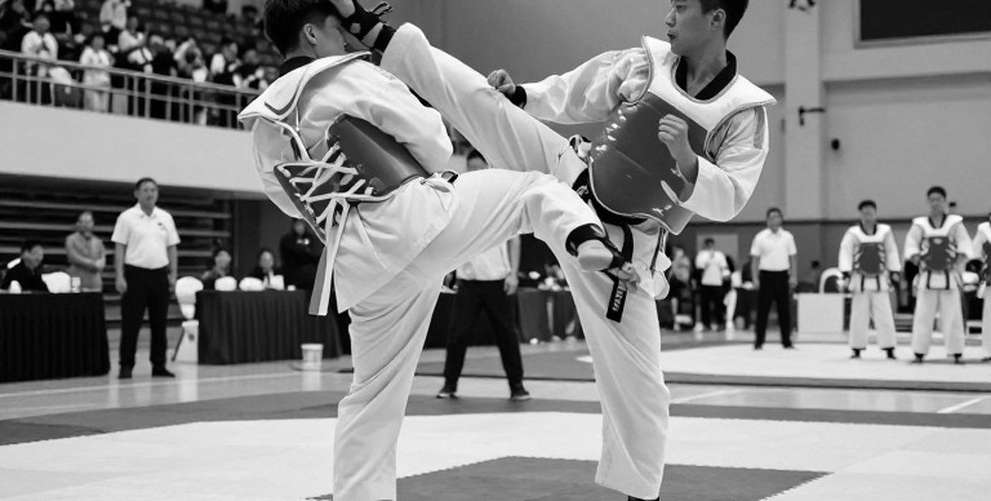
The 2026 World Taekwondo Poomsae Championships took place in Chuncheon, South Korea. This is a World Taekwondo event where poomsae is organized as its own category, not kyorugi. Kyorugi is combat: knockouts, weight classes, contact judging. Poomsae is forms: scored on accuracy and presentation. The two share the name taekwondo but obey different competitive logics.
Here I must correct a common misreading. U50, U40 and U30 in poomsae are age divisions, not weight classes. Under-50 means below 50 years old. No bodyweight is placed on a scale. There is no dehydration, no rehydration, no pressure to cut down. Anyone who reads this result as a weight-class victory misunderstands the entire event structure.
At Chuncheon 2026, the pair Nguyen Thi Le Kim and Nguyen Thien Phung won gold in mixed-pair standard poomsae U50. In 2026 in Hong Kong, Chau Tuyet Van and Nguyen Thien Phung had won gold in the same category. Coach Nguyen Thanh Huy replaced Van with Le Kim for the new cycle. The new pair repeated the gold. This was Vietnam’s first gold of the 2026 edition, according to the report.
The reported path crossed Myanmar, Chinese Taipei, Turkey, Iran, and then Denmark in the final. On a map, that is a bracket spanning Asia and Europe. Geographically, it shows poomsae has genuine multi-confederation participation. But the report gives no scores, no margins, no opponent seeding. So I can say the path was broad; I cannot say how dominant Vietnam was.
The most revealing detail in the source is buried: the absence of Korean athletes made the bracket easier. To me, that is the heaviest sentence. It admits an implicit benchmark: South Korea is the dominant nation in poomsae. When that benchmark is absent, the door opens for everyone else. This does not reduce the value of Vietnam’s gold, but it forces the correct scale: Vietnam won the bracket in front of it; it cannot yet claim to have overtaken South Korea.
In recognized poomsae, there is no freestyle-style difficulty score. This technical point matters. A recognized form has prescribed movements. Athletes cannot freely raise difficulty with complex spins or jumps to earn points. The game is accuracy, speed, power, rhythm, expression and synchronization. For a pair, synchrony is the biggest variable. Two athletes must enter the same stance, strike, stop and breathe at the same time. The smallest mismatch is visible.
That is why changing a partner and still winning means more than keeping the same lineup. In 2026 it was Van and Phung. In 2026 it was Le Kim and Phung. The retained variable is Nguyen Thien Phung. He is the pair’s anchor, a two-time world champion in mixed-pair U50 with two different partners. That is the most defensible strength signal in the whole story.
I do not have detailed scoring data to prove Phung is the technical leader. But in a synchronized event, adapting to two partners across two championships shows his ability to hold rhythm, structure and nerve. That is the kind of skill that never appears on a scoresheet but decides who reaches the final.
On the women’s side, the story also matters. Chau Tuyet Van still competed in 2026, but in different events: individual U40 and pair/team U50. An athlete competing across two age divisions in one championship signals flexibility and well-managed career length. Poomsae careers last longer than combat careers. There is no contact threshold forcing early retirement. The wear is in joints, tendons, groins, ankles and knees, from thousands of jumps and turns.
Nguyen Thi Le Kim appears as the successor. She paired with Phung for gold, then also appeared in the women’s team event with Lien Thi Tuyet Mai. That is a heavy competition load. One athlete carries expectations in the pair event and must save energy for the team event. From a squad-management view, Le Kim is a key asset and a concentration risk. One injury can affect multiple lanes.
Lien Thi Tuyet Mai, though less mentioned in the main result line, sits inside the women’s team picture. In team poomsae, synchronization is not just two people. Three or more create a harder rhythm problem. Different heights, arm spans, flexibility and spatial feel must align. The center athlete holds the axis; the sides adjust amplitude. One missed beat and the whole set drifts.
Looking at Vietnam’s Chuncheon squad, I see a veteran-plus-successor model. Chau Tuyet Van is the experiential layer, appearing across age groups. Nguyen Thien Phung is the anchor, holding the mixed-pair gold chain. Nguyen Thi Le Kim is the rising spearhead, tested in the most important event. Lien Thi Tuyet Mai is the team piece. Coach Nguyen Thanh Huy is the conductor across two gold cycles. This is the structure of a program with depth, not a one-off.
I still wonder how Vietnamese media will read this result. Many outlets will call it a historic breakthrough. But we must distinguish: the first gold of the 2026 edition is different from the first gold ever in this category. Vietnam won mixed-pair U50 in 2026. 2026 is a repeat. The correct phrasing helps fans understand this is title retention with a successful partner change. It is still admirable, only admirable in a different way.
Another caution: poomsae is a judged sport. The outcome is decided by panels, not by a goal or a finishing blow. That creates a perceived-fairness risk, especially when the championship is hosted by the sport’s dominant nation. No protest is reported. But structurally, the risk exists. The best way to reduce it is to publish detailed scores, comparison video and judging criteria. Fans deserve more than a one-line gold.
I have worked with hand-built datasets. I know what it means to count every rhythm, note every step, check every frame. In poomsae, with enough video, I would build three data layers: execution accuracy, synchronization, and expression and rhythm. Then I would compare across rounds. Only then could I know whether Vietnam won by being steadier or by opponents’ errors. The current report does not give me that material.
From a market view, a poomsae gold does not generate major broadcast revenue. Poomsae is not on the Olympic program, while kyorugi is. The poomsae world championships have prestige within the sport but limited mainstream reach. The medal’s value lies in national prestige, federation budget justification, grassroots pull and domestic sponsor confidence. Those are indirect returns, hard to measure in ticket money.
For Nguyen Thien Phung, two gold cycles are a rare media asset. He can become the face of Vietnamese poomsae for years, if the system uses it well. For Nguyen Thi Le Kim, the mixed-pair gold is a springboard to a pillar role. For Chau Tuyet Van, competing in U40 and U50 shows a long-career model. For Lien Thi Tuyet Mai, it is a chance to prove value in the team event.
I do not want to turn this into a simple victory song. My job is to find the piece the stadium forgets. Here the pieces are South Korea’s absence, the partner change, the U50 age division misread as a weight class, Le Kim’s load, and the judging-system question. Put together, they become a development map for Vietnamese poomsae.
The body is a blackboard the coach never fully reads. In poomsae, that is even truer. There is no direct opponent to react to. Athletes face themselves, inertia, breath, muscle memory. The winner is the one who keeps structure as pressure rises. Coach Nguyen Thanh Huy has shown he can keep that structure across two cycles.
One regret: the report gives no total scores, no opponent placements, no Korean medal count. Without those facts, I cannot place Vietnam’s gold in the wider hierarchy. I can only say it is a bright spot. It may be a bright spot in a thin campaign, given the first-gold-of-the-championship framing.
But do not dismiss it. In a synchronized event, changing a partner and still winning is a small feat. It says the coaching staff has built a pairing process, the new athlete has nerve, and the rhythm-keeper is adaptable. Those things do not appear by accident. They are the result of years of training, of repetitions so boring they become sacred, of fixing a hand angle one degree at a time.
I once saw a failure teach more than a win. The lesson from Chuncheon 2026 lies in how we name success. Misname it and we either inflate or diminish it. The correct name is: Vietnam retained the mixed-pair standard poomsae U50 world gold, with a new partner, in a bracket without South Korea. That is a real sporting achievement with technical depth, and with limits that must be recognized.
Between a 144Hz screen and a 200m track, I see the same rhythm. Elite sport, whether running, swimming or poomsae, is a war against tiny deviations. 0.2 seconds can ruin a medal. A hip beat out of place can ruin a form. Fans do not need to be referees to understand that. They only need enough data to see it.
For Vietnamese poomsae, the next step is data transparency: partial scores, comparison video, judging criteria. Build an internal database on accuracy, synchronization and rhythm for each athlete. When South Korea returns, when other Asian nations strengthen, Vietnam will need more than one lucky pair. It will need a system that can produce gold consistently.
The Chuncheon 2026 story ends with a gold medal. For me, it opens a longer problem: how to make each gold more than a short news line, how to turn it into a link in a chain of data, training and succession. Nguyen Thien Phung held his link. Nguyen Thi Le Kim stepped in. Chau Tuyet Van remains present. Lien Thi Tuyet Mai remains part of the team. Seen correctly, these pieces show Vietnamese poomsae walking a real road.
I trust my eyes, but I trust hand-checked numbers more. The day Vietnamese poomsae has enough open data for fans to count, compare and debate, gold medals will carry more weight than metal shine. Chuncheon 2026 is an anchor. What is still missing is a long enough dataset to prove that anchor is not alone.

Cầu thủ liên quan
Bài đề xuất
When Data Goes Empty: Martial Arts Needs Information to Analyze2026-09-09
The Void at the Bangkok Weigh-In: What the Fight Record Never Tells2026-09-27
Vietnam's Poomsae at Chuncheon: A Medal Decided by the Person Standing Beside You, Not by the Kick2026-09-14
A World Poomsae Gold and a Substitution: Analyzing Vietnam's 2026 Chuncheon Title2026-09-19
Wushu brings a 'rain' of medals for Vietnamese sport at Asiad 202026-09-24
Vietnam's Poomsae and the Repricing of Scoring Rules: A Narrowing Edge in Presentation2026-09-12
Singapore's First Epee Medal: When Squad Data Speaks Instead of the Scoreboard2026-09-26
Bài đề xuất
The Silence After the Bell: Contracts, Data and the Careers of Vietnamese Fighters in Thailand2026-09-11
When Data Goes Empty: Martial Arts Needs Information to Analyze2026-09-09
Decoding Injuries and Fighting Style of Vietnamese Martial Artists: Lessons from Data2026-09-11
Warning: Cannot create sports article from empty data2026-09-09
Eight Layers of Data Beneath a Vietnamese Fight Card Scorecard2026-09-11
Global MMA Championship Map: Six Promotions, Seven Vacancies, and the Limits of the Word 'Champion'2026-09-15
Vietnam's Poomsae and the Repricing of Scoring Rules: A Narrowing Edge in Presentation2026-09-12