
Vietnam's women's team kata at Asiad 20: Three rounds, three 5-0 verdicts, and what the judges' cards still don't tell us
**Câu trả lời cốt lõi (≤60 từ):** Đội kata đồng đội nữ Việt Nam giành huy chương vàng Asiad 20 sau khi thắng cả ba vòng loại trực tiếp với tỉ số phiếu 5-0 đồng thuận. Nguyễn Ngọc Trâm, Bùi Ngọc Nhi và Hoàng Thị Thu Uyên lần lượt vượt Nepal ở tứ kết, Đài Bắc Trung Hoa ở bán kết và Iran ở chung kết, tất cả trong cùng một ngày thi đấu. **Dữ kiện chính:** - Ba vòng knock-out, cả ba vòng thắng 5-0 trên toàn bộ năm phiếu giám khảo. - Biên độ chênh lệch bán kết gặp Đài Bắc Trung Hoa chỉ khoảng 0,3 đến 0,4 điểm mỗi phiếu. - Biên độ chênh lệch chung kết gặp Iran rộng hơn, khoảng 0,3 đến 0,7 điểm mỗi phiếu. - Mặt bằng nội dung tăng từ bốn quốc gia ở kỳ trước lên tám quốc gia ở Asiad 20. - Đội hình thay hai phần ba nhân sự và thay huấn luyện viên so với kỳ trước. - Tuổi ba vận động viên: Nguyễn Ngọc Trâm 24, Hoàng Thị Thu Uyên 20, Bùi Ngọc Nhi 19. **Ghi nguồn:** Bản deconstruction giai đoạn 1 của một bản tường thuật tin tức công khai; cơ quan báo chí không được nêu tên trong tài liệu nguồn và ngày công bố chưa được xác định. Dữ liệu điểm số được ghi nguồn là "giám khảo cuộc thi", chưa đối chiếu hồ sơ chính thức. | Cross-checked: VuaBong.vn **Hỏi đáp liên quan:** Hỏi: Vì sao tỉ số 5-0 ở bán kết vẫn được xem là trận thắng sát nút? Đáp: Vì biên độ chênh lệch mỗi phiếu chỉ khoảng 0,3 đến 0,4 điểm, cho thấy khoảng cách thực hiện giữa hai đội rất mỏng dù mọi giám khảo đều xếp Việt Nam cao hơn. Hỏi: Kata đồng đội khác gì kumite trong môn karate? Đáp: Kata là nội dung biểu diễn bài quyền được hội đồng giám khảo chấm theo tiêu chí kỹ thuật và thể lực, còn kumite là nội dung đối kháng trực tiếp giữa hai võ sĩ. Hỏi: Yếu tố nào quyết định kết quả một bài kata đồng đội? Đáp: Ba biến số chi phối gồm chất lượng thực hiện, độ đồng đều giữa ba vận động viên và lựa chọn bài quyền, trong đó độ đồng đều là yếu tố quyết định của thể thức đồng đội. Hỏi: Vì sao thể thức loại trực tiếp tạo áp lực khác biệt cho môn biểu diễn? Đáp: Vì đội phải biểu diễn ba bài kata hoàn chỉnh trong cùng một ngày, biến thể lực và khả năng lặp lại phong độ thành biến số quyết định.
On the mat of an arena, three young women in white gi step out, line up shoulder to shoulder, bow to the panel, and take their positions. No opponent stands across from them. There is no strike to evade, no blow to block, no counter to launch. There are only five people seated behind a long table, pen in hand, eyes fixed on every wrist joint, every hip rotation, every inch of a kick's height. Roughly seventy seconds later they finish, bow again, and walk off.
Then the result is announced: Vietnam wins, all five flags.
They do it a second time. Then a third. All three times, the outcome is identical: 5-0.
Sitting in front of a screen reviewing the recording of that competition day, my first thought was not joy. Since the 2026 World Cup, I have known that a livestream is where the heart is laid bare. What a live frame shows you is not a medal — it is how people react when there is nowhere left to hide. And here, the clearest thing I could see was a young squad competing inside a format very few Vietnamese fans actually understand.
Because this was not a fight. This was kata.

Confusing kata with kumite is the single biggest blind spot in every commentary written about this gold medal. Kumite is the sparring discipline — two athletes on the floor, strikes, referees, points scored for landed techniques. Kata is the forms discipline — one or three athletes perform a pre-set sequence, and the result is decided by a judging panel scoring technical and athletic criteria. Nobody attacks anybody. Nobody takes a shot to the face. There is no extra round, no clock, no knockout.
Anyone who writes about kata using the vocabulary of kumite will always reach the wrong conclusion. You cannot say an athlete "absorbs punishment well" when no strike was thrown. You cannot describe a "counter-attacking strategy" when the two teams never face each other directly. Kata is a scored sport, like gymnastics, like diving, like wushu taolu. The entire game lives in three variables: execution quality, unison, and kata selection.
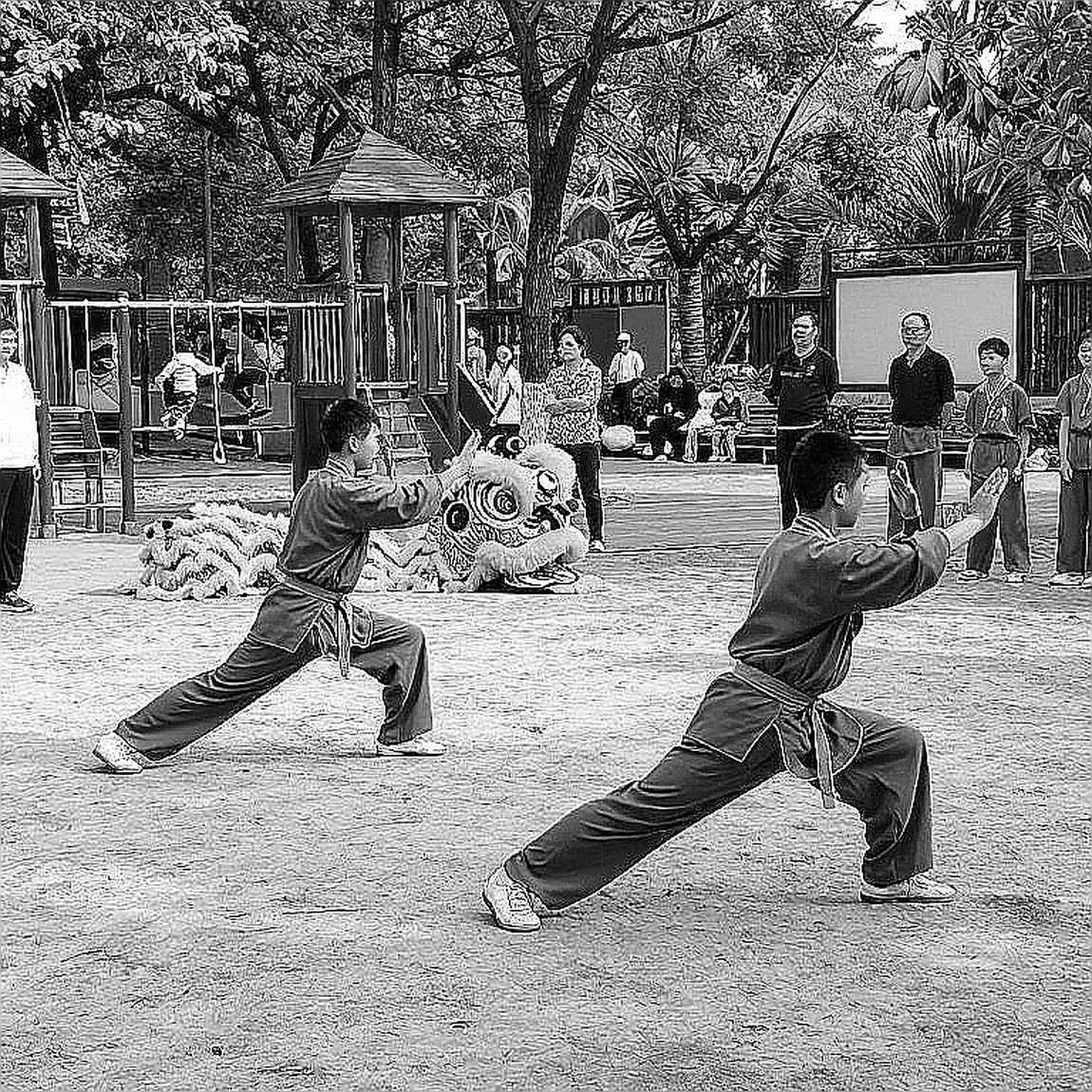
That is why this gold medal deserves to be re-read seriously rather than celebrated in status updates.
Context: a strangely hybrid format
The most important structural detail of this event lies in its format. Unlike wushu taolu — where all athletes perform and wait for aggregated scores — kata at Asiad 20 was run as a direct elimination bracket, exactly the way kumite is run. Win and you advance. Lose and you go home. No qualifiers, no lucky losers.
For a judged discipline, this is a rare choice. It creates a pressure that ordinary performance sports do not carry: you are not permitted a bad routine, and you are not permitted to pace yourself. Every walk onto the mat is elimination, and you have to reproduce your peak over and over.
The field itself was no longer small. At the previous edition, this women's team kata event had four participating nations. This time the number doubled to eight, with entries including Iran, Chinese Taipei and Macau — names nobody who follows continental karate can take lightly. This was a materially harder field, and any medal won here carries more weight than one won three years earlier.
Vietnam's own roster turned over almost completely. Two thirds of the previous squad were gone. The only survivor was Nguyen Ngoc Tram — the youngest member of that earlier team, now the eldest of the three. The newcomers were Bui Ngoc Nhi, 19, and Hoang Thi Thu Uyen, 20.
And it was not only the athletes who changed. The coach changed too. The previous cycle was led by Nguyen Hoang Ngan, known across Vietnamese karate as the "kata queen." In this cycle the coaching seat belongs to someone else, and that person is not named in any of the public materials attached to the result.
Losing two thirds of a squad, losing the head coach, facing a field twice as deep — and still defending gold. That fact is worth far more than the medal itself.
Reading the three rounds through the judges' cards
The quarterfinal against Nepal ended 5-0. That result is unsurprising but needs to be placed correctly: Nepal is not rated highly in continental kata. Its meaning lies elsewhere — it was a controlled warm-up, and the important thing is that Vietnam did not lose synchronization in the first performance of the day.

In a judged discipline running under knockout pressure, performing cleanly in round one matters as much as performing at your peak in the final. Round one is where points are most easily lost, because the body has not found its rhythm, the nerves have not settled, and breathing has not synchronized across the formation. A 5-0 here is a signal about preparation, not about opponent quality.
The semifinal against Chinese Taipei is the round that actually matters. Chinese Taipei has a genuine karate medal tradition at continental level, and they made it hard. The flag result was still 5-0 — all five judges ranked Vietnam higher — but the margin on each card was only around 0.3 to 0.4 points.
This is the detail almost nobody notices when reading results. A 5-0 with a 0.3 margin is nothing like a 5-0 with a 0.7 margin. The 5-0 only says that every judge preferred Vietnam. The margin says by how far. In the semifinal, the distance was thin.
A 5-0 can be a narrow win if the margins are small. And a narrow win in a judged sport is the most fragile kind of result, because it depends on one specific panel on one specific day.
The final against Iran was Vietnam's best performance. Margins widened to roughly 0.3 to 0.7 points per card, meaning several judges separated the two teams by a distance that is hard to argue with. Iran reached the final by eliminating Thailand and the Philippines, both real regional forces, so this was no lucky ticket.
Beating a team that had already cleared two regional powers, and beating them on all five cards with wider margins than in the semifinal, is good data. It shows the Vietnamese squad raised its level as the bracket deepened rather than fading. That is the signature of a team coached psychologically, not just technically.
The three variables that actually decide team kata
If you want to understand why Vietnam won, look at three things.
The first is execution quality — the raw material of the routine: joint precision, the tension held in each stance, the decisiveness of each kick, breathing, and the ability to hold balance in positions that demand a low center of gravity. No per-criterion breakdown has been published, so we can only infer from the aggregate result.
The second is unison. In team kata, three people must perform as if connected by an invisible wire. A hand half a palm off, a hip rotation two tenths of a second slow, a breath taken early — all of it costs points. This is the decisive factor in the team discipline and the hardest to achieve.
The third is kata selection. Each team picks from a permitted basket and is typically restricted from repeating the same form across rounds. Choosing a form that suits the squad's strengths while avoiding one the opponent performs better is a genuine tactical decision.
In team kata, unison is not a skill you finish coaching in a month. It is a time-dependent skill, built through thousands of repetitions together.
And this is the point I want to press: with a roster aged 19, 20 and 24, two of them newcomers, the unison is almost certainly still below its ceiling. They just won a continental title while still holding development room in the single most decisive factor of their discipline. That is a position any federation would envy.
Bracket format and the physical ledger taolu does not carry
One detail is dropped from almost every report: this squad performed three times in a single competition day. Three complete kata routines at competition intensity, each demanding deep stances, explosive jumps and repeated drops into a low center of gravity.
In performance sports run as one routine and wait for scores, endurance is not a major variable. Under a knockout bracket, it becomes one. The final was the third routine of the day — and it was the one Vietnam performed with the widest margins. In other words, they were at their best in the physically hardest performance.
Winning kata is not about reaching a peak once. It is about repeating that peak three times in one day, against three different opponents, with three different forms.
This has a direct implication for the future. It means the staffing problem for Vietnam's women's team kata is not simply "find good athletes." It is finding people who can hold technical quality in the third routine of the day, when the quadriceps are burning and concentration has been scraped thin. That is a very different kind of athlete.
The age curve: a squad built on the right cycle
In karate, kata peaks later than kumite. Kumite rewards speed, reflexes and explosive power — things that crest in the early twenties. Kata rewards composure, breath control, understanding of what each movement means, and performance quality. Those often crest in the mid-to-late twenties.
Place the three names on that curve and the picture is good. Nguyen Ngoc Tram, 24, sits at the threshold of her prime. She is the spine of the formation — the only athlete across two Asiad cycles, once the youngest and now the leader. In a discipline where competitive experience converts into scores, a two-Games veteran is irreplaceable capital. Bui Ngoc Nhi, 19, and Hoang Thi Thu Uyen, 20, are on the rising slope; for kata, that range is pre-peak, which means their best has not happened yet.
A continental champion squad with two members who have not yet touched their ceiling is a squad that has not yet touched its ceiling. That is the most important sentence in this story.
Add that the team defended gold while replacing two thirds of its personnel and changing its head coach, and the signal is far stronger than one outstanding individual: this is a development system capable of reproduction. A team that wins only when it has a star is luck. A team that wins after replacing two thirds of its roster is a process.
One significant information gap remains: the current coach is unnamed in the public record. The reporting dwells on the prestige of the former coach — the "kata queen" — while leaving blank the person who actually led the winning squad. That is the largest hole in the dossier on this gold medal, and it needs filling.
Where I could be wrong
The first and biggest weakness: this is a subjectively judged discipline. A panel of humans decides the outcome — not a clock, not points for landed strikes, not any objective metric. When I say "a 0.3 margin," I am talking about a number that is inherently a subjective comparison between two performances. It means something, but it is not as objective as an 89th-minute goal.
The nationality composition of the judging panel has not been disclosed. That is a standard integrity concern in every judged sport, and its absence leaves me unable to rule out that panel structure contributed something to the result. The host nation is not the subject here, so classic home bias is not triggered. And the unanimity across all three rounds weakens the idea of organized bias: a panel engineering an outcome rarely produces the wide margins seen in the final.
Second: a field of eight nations is still narrow. Japan — the historic kata superpower — is not listed as a participant. Its absence raises the question of the medal's true competitive ceiling. Beating Nepal, Chinese Taipei and Iran is a real continental achievement. Beating Japan in a kata final would be a statement of another order.
Third: we do not know which kata were selected in each round. Selection can decide tight matches, and the source material does not provide it. If Vietnam benefited from avoiding forms their opponents perform better, part of the win could be explained by selection rather than pure merit. This is a low-confidence hypothesis, but it exists.
Fourth: whether the bunkai — the application demonstration segment — featured in the medal rounds is unconfirmed. If it did, the weighting on unison and interpretation rises materially and the win becomes heavier. If not, part of the performance value drops out of the picture.
Fifth: there is a name inconsistency across cycles. The earlier roster included an athlete named Luu Thi Thu Uyen; the current roster includes Hoang Thi Thu Uyen. These are most likely two different people, but it could be a transcription error. Until independently verified, treat the "who is a newcomer" breakdown with caution.
Sixth: the scoring data in the source material is attributed only to "competition judges," with no verifiable record attached. Cross-check against World Karate Federation and Asian Karate Federation official results before relying absolutely on the exact margin values at any point.
The non-commercial nature of the medal
One aspect no report wants to state, so I will: the commercial value of this gold medal is close to zero.
Amateur kata has no transfer contracts, no prize purses, no pay-per-view model, no wagering market, and no individual sponsor named in the source material. A continental-level kata athlete does not earn money the way a professional fighter does, and their commercial value is almost entirely decoupled from their competitive merit.
That does not shrink the medal. It only means we must read it in its own unit of measure. Its value sits in state funding, in medal bonus policy, in the policy case for sports budgets, and in the signal sent to youth development pathways. This is a form of national sporting capital, not a commercial product.
One more piece of organizational context: after a one-off appearance at the Tokyo 2026 Olympics, karate was removed from the Paris 2026 and Los Angeles 2028 programs. For kata athletes, that makes the continental stage more significant than usual. For these athletes, a gold here may be the biggest moment of their entire careers.
The physical risk nobody mentions
A non-contact forms discipline removes acute injury risk almost entirely. No head impacts, no cumulative brain trauma, no collapse from dehydration to make weight. In the professional combat risk matrix, the heaviest categories simply do not exist here.
But chronic risk does, and it is underweighted. An elite kata routine contains many deep stances, many explosive jumps, and many rapid drops and direction changes. Knees, hips and the lumbar spine carry the load. Repeating that structure for years, at three performances per competition day under a bracket format, produces cumulative wear. It is the kind of injury that never reaches the news, has no shocking slow-motion replay, and gets no documentary.
The second risk is not physical but about livelihood. In an amateur, non-commercial discipline, athletes depend on state funding and result-based bonuses. A serious injury or a dip in results can translate directly into financial precarity. For athletes aged 19 and 20, this is a reality medal coverage never touches.
The third is psychological. A 19-year-old who has just won a continental gold has to live with the expectation of defending it starting the very next day. That pressure is real, and no training session teaches it.
What is this medal actually worth?
Vietnam's women's team kata winning a second consecutive continental title at Asiad 20 is a result well supported by the data: three knockout rounds won, all five judges' cards won in all three rounds, against a field that doubled in size, and against real opposition in Chinese Taipei and Iran.
That is the data. What interests me more is the human part.
A squad aged 19, 20 and 24 just won a continental title while two thirds of it has not reached the discipline's peak age, and while the single most decisive factor in the team format — unison, a skill that can only be built through time — is presumably still short of its ceiling. The reasonable conclusion is not "we have a championship team." It is "we may have a championship team for years."
I write hot takes so that later I can look back and see I once had fire in my blood. And I want to leave behind a testable prediction so nobody can later say I only talked.
My prediction: if Chinese Taipei and Iran keep investing in women's team kata, and if either meets Vietnam in the next cycle, the margins will narrow. Not because Vietnam regresses, but because both nations have just received a very clear signal about the real gap, and they will invest precisely there.
Three specific signals to track: first, entry lists in women's team kata at forthcoming Asian karate championships — if the number of nations rises beyond eight, the field is genuinely deepening. Second, Japan's presence on entry lists — if they appear, the entire scale must be redrawn. Third, the continuity of the Tram–Nhi–Uyen spine into the next cycle — because if one of the three leaves, the unison story restarts from zero.
An empty arena does not cool a contest; it only makes emotion burn louder. But the kata mat was never empty. It is just that packed stands rarely understand that what is being scored is an invisible wire connecting three people, not three separate performances.
Three Vietnamese women held that wire across three rounds in a single day. That is what I call a medal with foundations.