
U23 Vietnam vs U23 Philippines: The 1-5 Scoreline Lies, and the Long Throw Remains Unsolved
**Core answer**: U23 Vietnam meet U23 Philippines on 18 September 2026 in Asian Games Group C. Vietnam drew 1-1 with Kuwait; Philippines lost 1-5 to Uzbekistan after a 48th-minute red card. Vietnam have beaten Philippines twice in a year, both via late goals, yet conceded a long-throw header from the same opponent in 2025. **Key facts**: - Vietnam recorded 17 shots and one goal against Kuwait, a 5.9% conversion rate. - Philippines played over 40 minutes with ten men after Gavin Muens' 48th-minute red card. - Merino Martin headed in Antoine Ortega's long throw; Vietnam conceded the same mechanism in 2025. - Only two Vietnam squad members played the ASEAN Cup; over half of Philippines' squad did. - Both previous Vietnam wins over Philippines arrived at minute 89 or later. **Source attribution**: Stage-2 pre-match analysis, published ahead of the 18 September 2026 fixture. | Cross-checked: VuaBong.vn **Related Q&A**: Q: Will Gavin Muens play against Vietnam? A: No — a standard one-match suspension applies after his 48th-minute red card. Q: What is Vietnam's main defensive risk? A: The long-throw and second-ball channel, which already produced a goal against them in 2025. Q: Who creates chances for Philippines? A: Captain Sandro Reyes generated three first-half shooting chances against Uzbekistan.
Antoine Ortega stood near the touchline, both hands cradling the ball as if it were a river stone. The stadium was quiet enough to hear the breathing of the man in the front row. Then the ball left his hands, tracing a short, brutal arc into the penalty area. Merino Martin sprang upward like a released spring. The header hit the net.
That is how U23 Philippines scored against Uzbekistan on matchday one of the men's football tournament at the 2026 Asian Games — and they did it with only ten men on the pitch.
I had seen that moment once before. Not on a screen, but at a different tournament, in a different semi-final. U23 Philippines again. A throw-in again. A header again. And U23 Vietnam again as the victim. That is why I do not trust the 1-5 scoreline being cited as evidence of an easy night ahead.
A football story never begins at the first minute. It begins at a throw-in someone forgot.
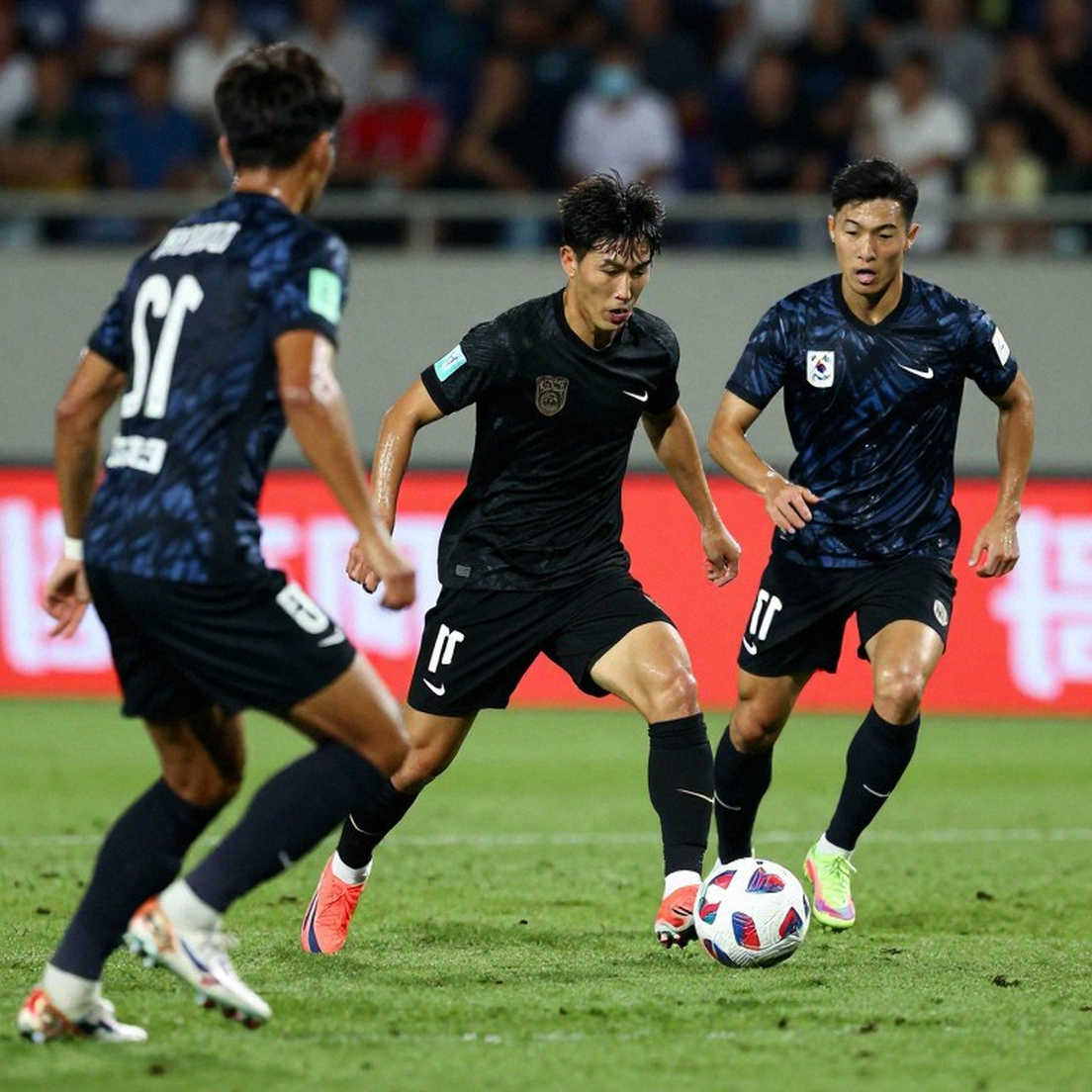
At 13:30 on 18 September, in Japan, U23 Vietnam meet U23 Philippines on matchday two of Group C. On paper, this is a favourite against an underdog. This group does not permit anyone to sit still.
On matchday one, U23 Vietnam drew 1-1 with Kuwait. U23 Philippines lost 1-5 to Uzbekistan. On the table, that gap looks wide. On grass, it is far narrower.
U23 Vietnam produced 17 shots against Kuwait and scored once. A conversion rate of roughly 5.9%. That is the most concrete data point available after matchday one — and it does not describe a sharp attack. It describes an attack that generated volume without generating quality.
Philippines, meanwhile, lost heavily under unusual circumstances: a red card in the 48th minute. Before going a man down, captain Sandro Reyes had created three first-half shooting chances. After going a man down, they still hit the crossbar on 59 minutes and scored on 62. A ten-man side creating chances against Uzbekistan — a continental youth heavyweight — is not a weak side.
And here is the most important scheduling fact: if the final matchday pairings follow the expected order, Vietnam face Uzbekistan, the group's strongest team, last, while Philippines face Kuwait. That means Vietnam's need for three points on 18 September is structurally greater than the Philippines'.
Belief in this fixture does not rest on the scoreboard. It rests on what happens before the scoreboard lights up.
One detail made me stop longest: U23 Vietnam have already conceded from exactly this Philippines throw-in, in the 2026 Southeast Asian U23 Championship semi-final. The mechanism repeats. Ortega throws, the ball drops into the six-yard zone, an opposing centre-back rises to head it. When a mechanism repeats, it stops being an accident. It becomes a tactical hole with an address.
Modern football spends hours dissecting corners and free kicks. The throw-in — treated by many teams as dead-ball clutter not worth thinking about — is the cheapest and most effective weapon available to the weaker side. It requires no elite technique. It requires one man who can throw far and one man who can head calmly. Philippines have both.
More concerning still: against Kuwait, Vietnam's back line repeatedly left goalkeeper Cao Van Binh facing direct shots from the second line. Cao Van Binh was excellent, and he is the reason the game was not lost. But a defence sustained by a goalkeeper's peak form is a defence living on credit. Analysts call this mean reversion — exceptional form does not last. The right question is not whether Cao Van Binh can sustain it, but whether the defence can reduce the number of unblocked shots.
Then there is the attack. Seventeen shots, one goal. Thanh Nhan, Quoc Viet and Nguyen Le Phat were publicly named as lacking composure. Composure is not innate; it is a product of environment. A young forward criticised in public will shoot in a state of fear, not in a state of wanting to score.
What the pre-match analysis does not say out loud: those 17 shots most likely came against a deep-lying Kuwait block. If so, the Philippines match is a different test in kind. Philippines do not sit deep. They press and transition. Vietnam's decisive problem may lie in build-up against a pressing opponent, rather than in finishing.
On the other side, one fact has been overlooked. Gavin Muens — the midfielder sent off in the 48th minute — will almost certainly be absent against Vietnam under standard disciplinary rules. That removes quality from precisely the department coach Dinh Hong Vinh identified as the opponent's strength: transition speed. Losing a central midfielder costs Philippines some of their rhythm. But that is also a reason not to switch off: they will field someone else, and that someone has not yet been read by Vietnam.
One statistic haunts me more than the rest. Vietnam's Asian Games squad contains only two players who featured in the senior national team's ASEAN Cup title run: Ngoc My and Dinh Quang Kiet. More than half of the Philippines squad has just played senior regional football. This is an inversion of the old order, in which Vietnam held an experience advantage through an unbroken development pipeline.
The structural reason: men's football at the Asian Games falls outside FIFA's mandatory release window. V.League clubs are not obliged to release players, and they choose not to. Vietnam's U23 squad is thus diluted by an economic decision, not by a professional error.
Finally, there is a platform Vietnam have proven twice. Both recent wins over Philippines were decided late: the 2026 Southeast Asian U23 Championship semi-final, with goals from Dinh Bac and Xuan Bac in a 2-1 win, and the SEA Games 33 semi-final, with Le Van Thuan scoring on 89 minutes and Thanh Nhan on 90+2. Vietnam's bench goes far beyond the concept of a contingency. It is a verified weapon.
The biggest risk in this match lies in the throw-in, not the attack — and it carries direct precedent against this exact opponent.
But there is something else few mention: the 1-5 scoreline is itself feeding complacency.
Watch the scoreboard and you see a Philippines flattened by Uzbekistan. You do not see the 40-plus minutes a man down. You do not see the crossbar on 59 minutes. You do not see the goal on 62. You do not see Sandro Reyes creating three first-half chances. The scoreline is the only thing left after a match, and it is often the most honest liar.
Drawing on my experience tracking these fixtures, I once sat in the press tribune in Rostov-on-Don in 2026 and watched Japan lead Belgium 2-0 before losing 2-3 to a 14-second counterattack. I learned something: the stronger team does not lose because it is weaker. It loses because it believes it has already won.
For Vietnam, the trap is not Philippines. It is the table itself. And it is the pressure bearing down on coach Dinh Hong Vinh — compared by South Korean media with the Kim Sang Sik era, while his squad contains only two senior-capped players. A coach forced to prove himself tends to choose safety over invention. That safety can become a tactical trap of its own.
The match in Japan will not be decided by who is better. It will be decided by who remembers longer. Vietnam have beaten Philippines twice in a row, but both wins came through goals on 89 and 90+2 minutes. That is the signature of a narrow rivalry, not a stroll.
The stadium will be empty, but I can still hear the applause of those at home.
I count the seconds the Japanese way — not counting down, but counting what remains.